Welding is frequently thought of as an intimidating trade. But choosing the right welding power source can be equally intimidating and overwhelming. Whether you’re new to welding or want to upgrade your machine, it can be difficult to know what to look for.
What Is a Welding Power Source?
A welding power source is the equipment that supplies and controls the electrical energy required to create and maintain a welding arc. It converts available input power into a controlled welding output suitable for a specific welding process, electrode, material, and application.
The welding power source affects important welding characteristics such as:
- Welding current and voltage
- Arc stability
- Penetration
- Heat input
- Welding speed
- Duty cycle
- Process compatibility
Different welding processes require different output characteristics. For example, SMAW and TIG commonly use constant-current (CC) power sources, while MIG and flux-cored welding commonly use constant-voltage (CV) power sources.
Understanding these differences is the first step toward choosing the right welding power source.
Types of Welding Power Sources
Welding power sources can be classified in several ways, including by their electrical design and output characteristics. The most common types include transformer-based, transformer-rectifier, inverter, and engine-driven power sources.
Transformer Power Sources
Transformer-based welding power sources use a transformer to convert the available input voltage into a suitable welding output.
They are known for their relatively simple construction and robust design. However, traditional transformer machines are generally larger and heavier than modern inverter-based equipment.
Transformer-Rectifier Power Sources
A transformer-rectifier power source combines a transformer with a rectifier to provide DC welding output.
This design can provide a suitable DC output for processes that require controlled current and stable arc characteristics.
Inverter Welding Power Sources
Inverter welding power sources use high-frequency electronic switching to convert and control electrical power.
Compared with traditional transformer machines, inverter systems can offer a more compact and lightweight design while providing precise control over welding parameters.
They are widely used in modern welding equipment because they can support advanced functions such as adjustable output characteristics and pulse control.
Engine-Driven Welding Power Sources
Engine-driven welding power sources generate electrical power using an internal combustion engine.
They are particularly useful for outdoor construction, field maintenance, and other applications where grid electricity is unavailable.
Which Type Should You Choose?
For workshop and production environments with reliable electrical power, inverter or transformer-rectifier systems may be suitable depending on the welding process and required output.
For mobile or remote welding applications, an engine-driven power source can be more practical.
The best choice depends on the welding process, available input power, required output, portability, and operating environment.
Constant Current vs Constant Voltage Welding Power Sources
One of the most important factors when choosing a welding power source is understanding whether the welding process requires constant current (CC) or constant voltage (CV) output.
Constant Current (CC)
A constant-current power source is designed to maintain relatively stable welding current while allowing the voltage to vary with changes in arc length and welding conditions.
CC output is commonly associated with:
- Stick welding (SMAW)
- TIG welding (GTAW)
CC power sources are useful for processes where the welder controls arc length manually and stable current is important for maintaining consistent heat input.
Constant Voltage (CV)
A constant-voltage power source maintains a relatively stable voltage while allowing welding current to respond to changes in the welding circuit.
CV output is commonly used for:
- MIG welding (GMAW)
- Flux-cored arc welding (FCAW)
For wire-feed processes, the relationship between voltage, current, and wire feed speed plays an important role in maintaining a stable arc and consistent deposition.
CC vs CV: Quick Comparison
| Feature | Constant Current (CC) | Constant Voltage (CV) |
|---|---|---|
| Typical processes | SMAW, TIG | MIG, FCAW |
| Main control characteristic | Current | Voltage |
| Common application | Manual electrode or TIG welding | Wire-feed welding |
| Arc behavior | Designed for relatively stable current | Designed for relatively stable voltage |
| Best suited for | Manual arc control | Continuous wire feeding |
When selecting a welding power source, start with the welding process you plan to use. The required output characteristic should match the process rather than simply choosing the machine with the highest amperage.
Choose a Welding Power Source by Welding Process
The welding process should be one of the first factors you consider when choosing a welding power source. Different processes require different output characteristics, current ranges, and control functions.
| Welding Process | Typical Power Source | Important Considerations |
|---|---|---|
| SMAW / Stick | CC | Amperage range, arc characteristics, electrode compatibility |
| TIG / GTAW | CC | Current control, AC/DC capability, pulse functions |
| MIG / GMAW | CV | Voltage control, wire feed compatibility, duty cycle |
| FCAW | CV | Output capacity, wire-feed compatibility, duty cycle |
| Aluminum TIG | AC | AC capability, balance control, pulse functions |
| Precision / Thin Material Welding | CC or pulsed | Fine current control, pulse frequency, heat input |
The right choice depends not only on the welding process but also on the material, thickness, electrode or wire, and required production conditions.
For example, a power source intended primarily for MIG welding may not provide the same control characteristics required for TIG applications. Choosing according to process compatibility helps prevent underperformance and unnecessary equipment costs.
Select the Proper Power Supply
Welding power source types are defined by how they modulate electrical currents and what arc welding process is best supported by this modulation:
Direct Current (DC)
A DC power source is a flow of electrons in a single direction through a circuit. In welding, it creates a steadier arc and smoother output. It can be used to weld with a negative ground, or the flow of electrons can be reversed to flow toward a positive ground in reverse polarity.
Alternating Current (AC)
The AC power source is the bidirectional flow of electrons in which the polarity shifts a hundred or more times per second from a negative to a positive ground. Arcs tend to be less stable and welding is harder to control. However, AC welding can break apart oxide formation and allow for purer welding in some processes.
Pulsed Current
This is a form of DC welding in which the current goes from a high peak current to a lower background current at a frequency determined by the operator. This narrows the arc, allowing greater penetration while reducing the effect on surrounding materials. As a result, pulsed current welding is an excellent choice for welding thin metal or performing deep welds on thicker materials.
Pulsed Voltage and Heat
Pulsing GMAW power supplies focus on controlling pulsed voltage and heat applied to the consumable electrode. Controlling the pulsed voltage (heat) and wire feed speed allows greater control over how the wire melts and the rate of deposition. Adaptive pulse GMAW carefully monitors feedback and automatically compensates to keep the arc consistent despite variation by the welder and differences in height and joint location.
Key Specifications to Compare Before Buying
Once you have identified the welding process and required output type, compare the following specifications before choosing a welding power source.
1. Input Power
Check the electrical supply available at your workplace before purchasing a welding machine.
Common input configurations include single-phase and three-phase power. The machine must be compatible with the voltage and phase available at the installation site.
2. Output Current Range
Check both the minimum and maximum welding current.
A machine with a high maximum amperage is not necessarily the best choice if you frequently work with thin materials. The minimum output and adjustment range can be equally important for low-current applications.
3. Duty Cycle
Duty cycle indicates how long a welding power source can operate at a specified output within a defined test period.
If the machine will be used for continuous production, choose a power source with a duty cycle that matches the expected workload. Undersizing the machine can lead to overheating, interruptions, and reduced productivity.
4. Material Thickness
Material thickness directly affects the amount of welding power required.
Thicker materials generally require higher welding current or greater heat input, while thin materials require more precise control to reduce the risk of burn-through or distortion.
5. AC/DC Capability
Consider whether your application requires AC, DC, or both.
If you work with processes or materials that require AC output, such as certain aluminum TIG applications, an AC-capable machine may be necessary.
6. Pulse Function
Pulse control can be valuable when you need to manage heat input, improve control on thin materials, or achieve specific arc characteristics.
However, not every application requires pulse capability. Choose it according to your actual welding process and production requirements.
7. Portability
Consider where the machine will be used.
A compact inverter-based machine may be preferable for applications where equipment needs to be moved frequently, while a larger stationary machine may be appropriate for a fixed production environment.
8. Protection and Reliability
Look for features such as:
- Overheating protection
- Overcurrent protection
- Stable output control
- Suitable cooling systems
- Appropriate certifications
- Manufacturer warranty and technical support
A reliable welding power source should provide stable performance under the operating conditions for which it is designed.
Welding Power Source Selection Guide
If you are unsure which welding power source to choose, use this simple selection process:
Step 1: Identify Your Welding Process
Determine whether you will use:
- SMAW / Stick
- TIG / GTAW
- MIG / GMAW
- FCAW
- A combination of processes
Step 2: Determine the Required Output
Check whether your process requires:
- Constant current (CC)
- Constant voltage (CV)
- AC
- DC
- Pulse output
Step 3: Check Material and Thickness
Identify the materials you will weld and their typical thickness range.
This helps determine the required current range and heat-control capability.
Step 4: Check Available Input Power
Make sure the welding power source matches the electrical supply available at your facility or jobsite.
Step 5: Calculate the Required Duty Cycle
For occasional repair work, a lower duty-cycle machine may be sufficient.
For production welding, choose a machine capable of operating continuously at the required output without exceeding its rated duty cycle.
Step 6: Consider Your Working Environment
Decide whether you need:
- A stationary workshop machine
- A portable welding power source
- An engine-driven system for remote work
- A multi-process welding machine
Step 7: Compare Long-Term Support
Finally, compare warranty coverage, certifications, spare parts availability, technical support, and manufacturer experience.
The best welding power source is not necessarily the machine with the highest output. It is the one whose output characteristics, capacity, and features match your welding process and working conditions.
Before You Buy
One of the most important elements to consider when shopping for a new machine is the warranty and certification. Odds are, you will need good warranty and technical support during the life of your machine. Be sure to purchase a machine from a reputable company and brand.
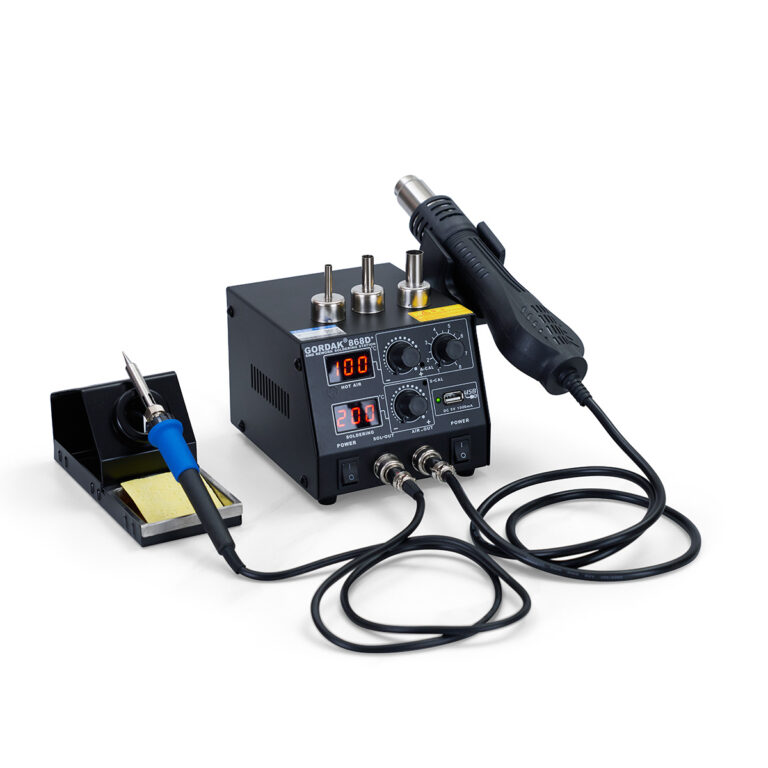
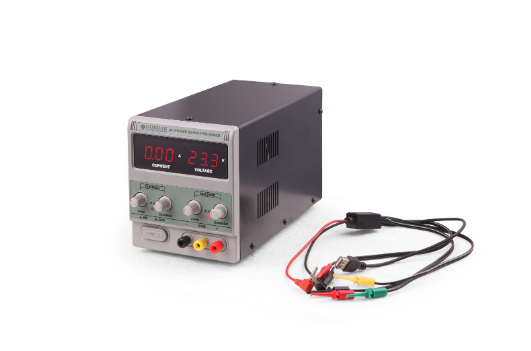
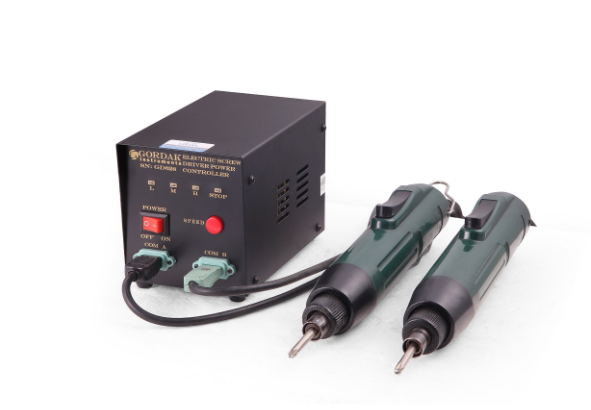
GORDAK make the customer number one and provide the customers with the quality, soldering station, SMD rework station, Ultrasonic Cleaner, welding power source and so on. Partner with us if you have any needs for above mentioned products. We will be your best choice.
FAQs
There is no single best welding power source for every application. The right choice depends on the welding process, material thickness, required output, input power, duty cycle, and working environment.
MIG welding commonly uses a constant-voltage (CV) power source because the process uses a continuous wire-feed system.
TIG welding commonly uses a constant-current (CC) power source because stable current control is important for maintaining the welding arc.
Neither is universally better. Inverter systems can provide a more compact design and precise electronic control, while traditional transformer-based systems are known for their robust and relatively simple construction. The better option depends on the application, portability requirements, and desired features.
Choose an output current range based on the welding process, electrode or wire, and material thickness. Do not select a machine solely because it has a higher maximum amperage. The usable low-end range and duty cycle are also important.
Duty cycle indicates how long the machine can operate at a specified output before requiring a cooling period. A higher duty cycle is generally more important for continuous production welding than for occasional repair work.
Welding & Related Processes
The Advancement of Robot Welding in the Manufacturing Industry
Welding Deformation and Residual Stress Prevention
What is the difference between welding and soldering