SMD (Surface Mount Device) components are the best choice for most modern electronic products because they support smaller PCB designs, automated assembly, and high-volume production. Through-hole components, however, remain the preferred option for applications requiring greater mechanical strength, high reliability, or easier manual assembly and repair.
Choosing between SMD and through-hole technology depends on your project requirements, manufacturing process, and maintenance needs. This guide compares both technologies in detail, explaining their differences, advantages, disadvantages, typical applications, and how to determine which is right for your PCB design or electronics project.
What Are SMD Components?
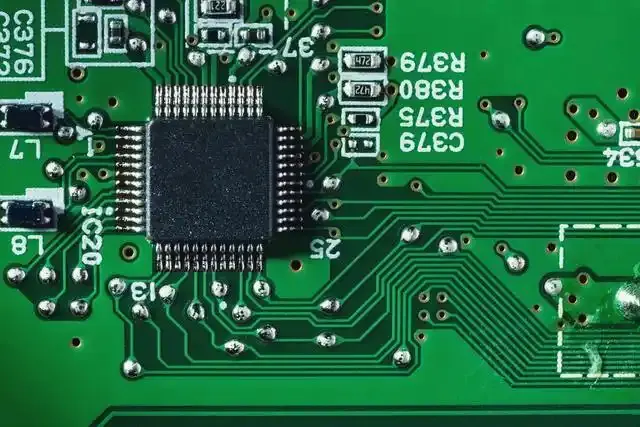
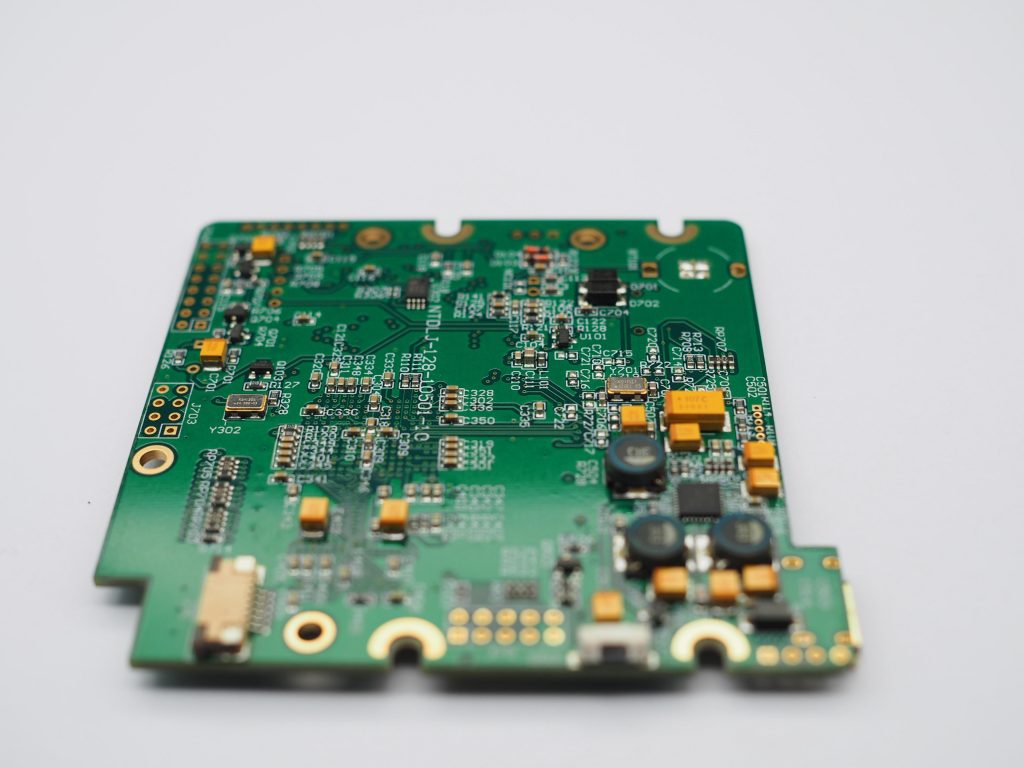
Surface Mount Devices (SMDs) are electronic components designed to be mounted directly onto the surface of a printed circuit board (PCB). Unlike traditional components, they do not require leads to pass through drilled holes.
Most modern consumer electronics—including smartphones, laptops, wearable devices, networking equipment, and IoT products—primarily use SMD components because they enable compact layouts and highly automated manufacturing.
Common SMD components include:
- Chip resistors and capacitors
- Integrated circuits (ICs)
- LEDs
- Transistors
- Crystal oscillators
- Inductors
SMD assembly is typically completed using automated pick-and-place machines followed by reflow soldering.
What Are Through-Hole Components?
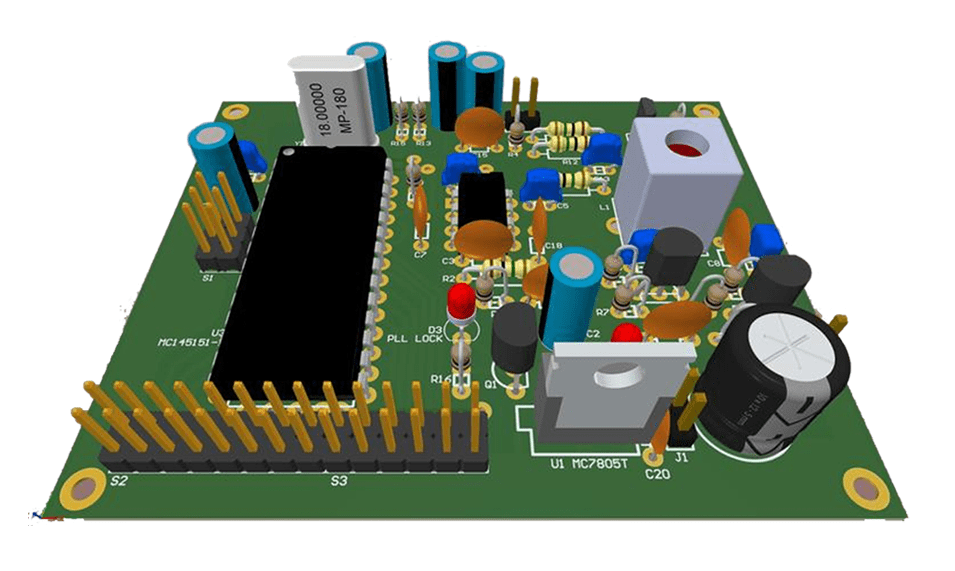
Through-hole components have metal leads that pass through drilled holes in the PCB and are soldered on the opposite side.
This assembly method creates strong mechanical connections, making through-hole technology suitable for components subjected to repeated physical stress or high electrical loads.
Common through-hole components include:
- Large electrolytic capacitors
- Transformers
- Power connectors
- Terminal blocks
- Relays
- Switches
- High-power resistors
Through-hole assembly may be completed manually or using wave soldering in production environments.
SMD vs Through-Hole: Key Differences
| Feature | SMD Components | Through-Hole Components |
|---|---|---|
| Mounting method | Soldered directly onto PCB surface | Leads inserted through drilled holes |
| PCB space | Very compact | Requires more board space |
| Assembly | Automated pick-and-place and reflow soldering | Manual assembly or wave soldering |
| Manufacturing speed | Very fast | Slower |
| Mechanical strength | Moderate | Excellent |
| Repair difficulty | Higher | Easier |
| Production cost | Lower in large volumes | Higher due to drilling and assembly |
| Typical applications | Consumer electronics, mobile devices, IoT | Industrial equipment, power electronics, connectors |
Advantages of SMD Components
SMD technology has become the industry standard for modern electronics manufacturing because it improves production efficiency while reducing product size.
Smaller PCB Designs
SMD components occupy much less space than through-hole components.
Because components can be mounted on both sides of the PCB, designers can achieve much higher circuit density without increasing board dimensions.
This is essential for products where size and weight are critical.
Faster Automated Assembly
SMD assembly is highly compatible with automated production.
Modern pick-and-place machines can position tens of thousands of components per hour with exceptional accuracy.
Combined with reflow soldering, this significantly increases manufacturing efficiency.
Lower Manufacturing Costs for High-Volume Production
Although SMT production equipment requires substantial investment, the cost per assembled PCB decreases considerably in large production runs due to:
- Reduced labor
- Faster assembly
- Higher throughput
- Lower material usage
For mass-produced electronics, SMD technology is generally the more economical option.
Better High-Frequency Performance
SMD components typically have shorter leads than through-hole components.
This reduces parasitic inductance and capacitance, improving signal integrity in high-speed and high-frequency circuits such as:
- RF devices
- Communication equipment
- High-speed digital systems
Advantages of Through-Hole Components
Despite the widespread adoption of SMT, through-hole technology remains essential in many industries.
Stronger Mechanical Connections
Because component leads pass through the PCB, through-hole solder joints provide greater resistance to:
- Mechanical stress
- Vibration
- Repeated insertion and removal
- Heavy components
For connectors, switches, and power terminals, through-hole construction is often the preferred choice.
Easier Manual Soldering
Through-hole components have larger leads and solder pads, making them much easier to solder by hand.
This makes them popular for:
- Educational projects
- Electronics training
- Prototype development
- DIY electronics
Beginners generally find through-hole soldering more forgiving than SMD assembly.
Easier Inspection and Repair
Through-hole components are easier to identify, remove, and replace.
For electronics repair technicians, larger component sizes simplify troubleshooting and reduce the likelihood of accidental damage during rework.
Better for High-Power Applications
Large components that handle significant current or generate heat often benefit from the stronger mechanical support of through-hole mounting.
Examples include:
- High-current connectors
- Power transformers
- Industrial relays
- Large inductors
SMD vs Through-Hole for PCB Assembly
The manufacturing process is one of the biggest differences between the two technologies.
SMT Assembly
Surface mount assembly generally includes:
- Applying solder paste
- Automatic component placement
- Reflow soldering
- Automated optical inspection (AOI)
This workflow enables high production speed and consistent solder quality.
Through-Hole Assembly
Through-hole assembly typically involves:
- Inserting component leads
- Manual or automated placement
- Wave soldering or hand soldering
- Visual inspection
Because drilling and lead insertion require additional manufacturing steps, through-hole assembly is generally slower and more labor-intensive.
SMD vs Through-Hole for Electronics Repair
From a repair perspective, the two technologies present different challenges.
Repairing SMD Components
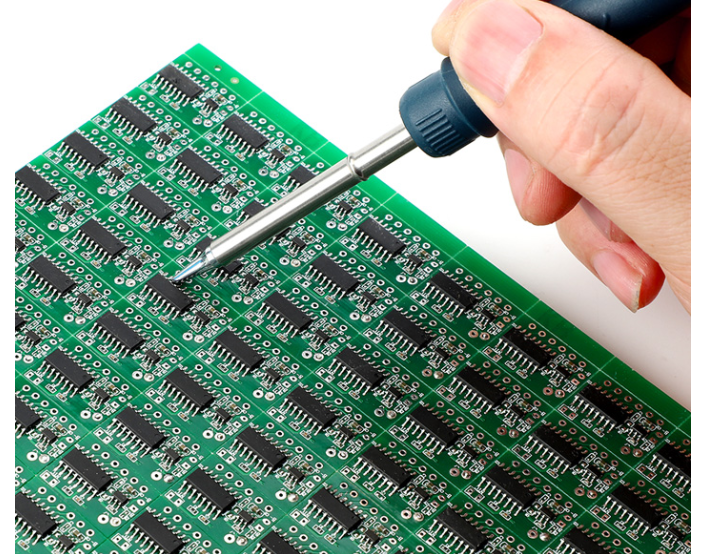
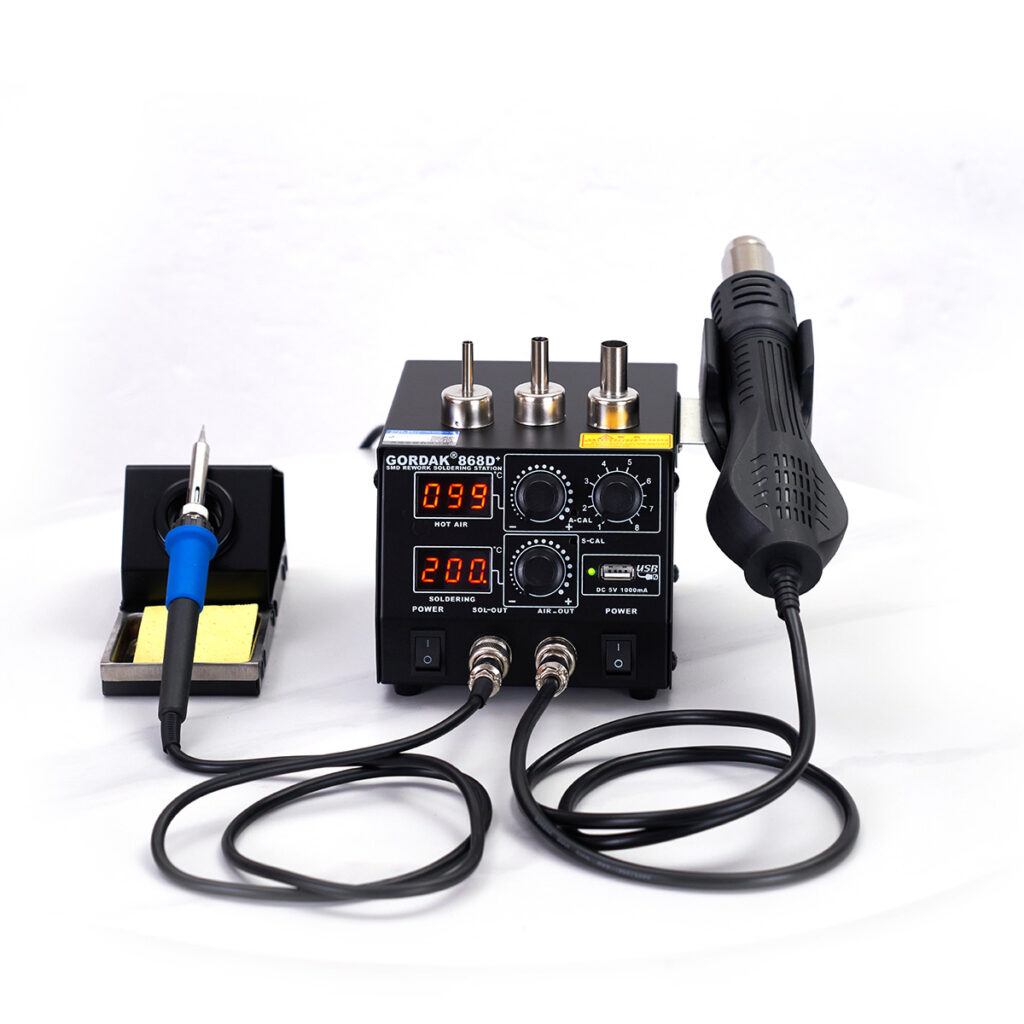
SMD repair often requires specialized equipment, including:
- Hot air rework stations
- Precision soldering stations
- Fine soldering tips
- Tweezers
- Magnification
The small size of SMD components demands accurate temperature control and steady hand positioning.
Repairing Through-Hole Components
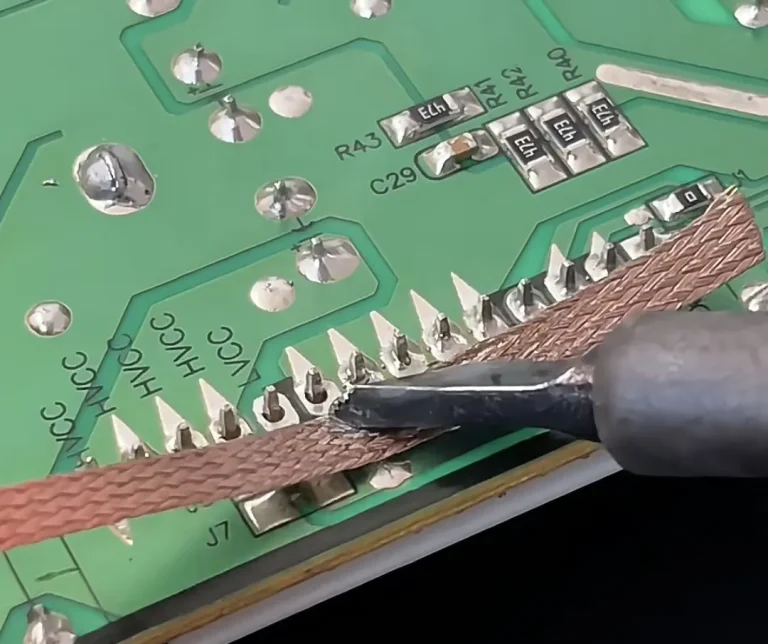
Through-hole components are usually easier to remove because each lead can be desoldered individually.
Common repair tools include:
- Temperature-controlled soldering irons
- Desoldering pumps
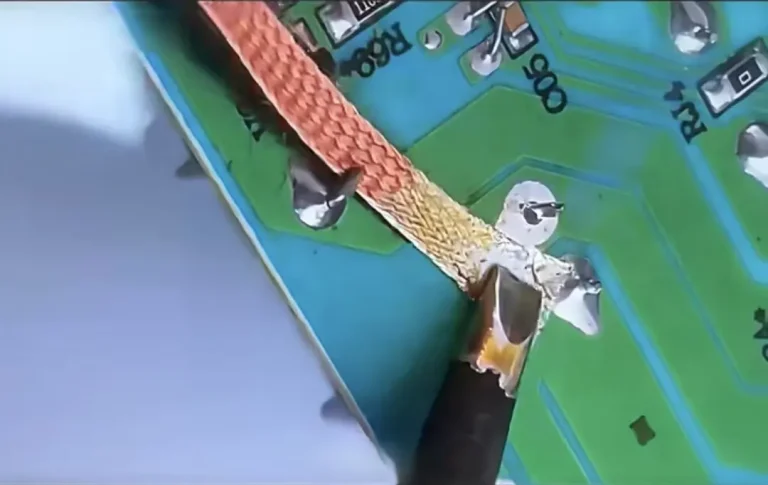
- Desoldering wick
For hobbyists and repair technicians, through-hole components are generally more forgiving during replacement.
Which Is Better for Beginners?
For most beginners, through-hole components are easier to learn because they are larger, easier to handle, and more forgiving during soldering.
Through-hole soldering allows new users to focus on developing proper soldering techniques without worrying about tiny components or closely spaced pads.
Advantages for beginners include:
- Larger solder pads that are easier to heat
- Components that are simple to position
- Lower risk of creating solder bridges
- Easier visual inspection of solder joints
- Simpler desoldering and component replacement
SMD soldering has a steeper learning curve, but modern soldering tools have made it much more accessible. Once basic soldering skills are developed, many hobbyists quickly transition to larger SMD packages such as 0805, 1206, and SOIC components before moving on to finer-pitch ICs.
Which Technology Is Better for Mass Production?
For nearly all high-volume electronics manufacturing, SMD technology is the preferred choice.
Automated SMT production offers significant advantages:
- Higher assembly speed
- Lower labor costs
- Better production consistency
- Greater component density
- Smaller product size
These advantages explain why smartphones, laptops, tablets, networking equipment, consumer electronics, and most IoT devices are built almost entirely with surface mount components.
Through-hole assembly is still widely used in manufacturing, but typically only for components that require greater mechanical strength or higher current capacity.
Can One PCB Use Both SMD and Through-Hole Components?
Yes. In fact, mixed-technology PCBs are extremely common.
Many electronic products combine the strengths of both assembly methods.
A typical PCB may include:
| Component | Preferred Technology |
|---|---|
| Microcontrollers | SMD |
| Memory chips | SMD |
| Chip resistors and capacitors | SMD |
| USB connectors | Through-hole or reinforced hybrid designs |
| DC power jacks | Through-hole |
| Large electrolytic capacitors | Through-hole |
| Relays | Through-hole |
| Terminal blocks | Through-hole |
Using both technologies allows designers to optimize:
- Mechanical strength
- Manufacturing efficiency
- Electrical performance
- PCB size
- Product reliability
Rather than choosing one technology exclusively, engineers often select the most suitable mounting method for each individual component.
Are Through-Hole Components Becoming Obsolete?
No. Although surface mount technology dominates modern electronics manufacturing, through-hole components continue to play an important role.
Through-hole technology remains the preferred choice in applications where durability and mechanical reliability are critical, including:
- Industrial control systems
- Automotive electronics
- Aerospace equipment
- Medical devices
- Power supplies
- High-current circuits
Connectors, transformers, switches, and large inductors are still commonly manufactured as through-hole components because they experience mechanical stress that surface-mounted parts may not withstand as effectively.
Instead of disappearing, through-hole technology has become more specialized while SMT has become the standard for most compact electronic products.
How to Choose Between SMD and Through-Hole
The best choice depends on your project goals rather than one technology being universally better.
Choose SMD components if you need:
- Compact PCB layouts
- High-density circuits
- Automated assembly
- High-volume production
- Better performance in high-frequency applications
Choose through-hole components if you need:
- Strong mechanical connections
- Easier hand soldering
- Simple maintenance and repair
- High-current or high-power capability
- Educational or prototype projects
For many products, combining both technologies provides the best balance of performance, manufacturability, and long-term reliability.
FAQs
Neither technology is inherently better. SMD is generally preferred for compact designs and automated manufacturing, while through-hole components are better suited for applications requiring mechanical strength, easier manual assembly, or frequent repairs.
Yes. Because their leads pass through the PCB and are soldered on the opposite side, through-hole components typically withstand greater mechanical stress than surface-mounted components.
Generally, yes. The smaller size and tighter spacing of SMD components require greater precision, especially when working with fine-pitch ICs. However, with a temperature-controlled soldering station, suitable soldering tips, and practice, most common SMD packages are relatively straightforward to solder.
Smartphones require extremely compact circuit boards with thousands of components. SMD technology enables high component density, automated assembly, and excellent electrical performance while minimizing product size and weight.
Yes. Many commercial products use a combination of both technologies, placing SMD components where space is limited and through-hole components where additional mechanical strength is required.
Conclusion
SMD and through-hole technologies each serve important roles in modern electronics. SMD components dominate today’s consumer electronics because they enable compact designs, automated assembly, and cost-effective mass production. Through-hole components remain indispensable where mechanical strength, high-current capability, and ease of repair are priorities.
Rather than viewing one technology as superior, engineers select the mounting method that best matches each component’s function. Many commercial PCBs successfully combine both SMD and through-hole components to achieve the ideal balance of size, reliability, manufacturability, and serviceability.
Professional Soldering Solutions for SMD and Through-Hole Assembly
Whether you’re assembling SMD circuits, soldering through-hole components, or performing PCB rework, stable temperature control and reliable equipment are essential for achieving consistent results.
GORDAK offers professional soldering stations, hot air rework stations, and integrated rework solutions designed for precision soldering, efficient PCB repair, and long-term industrial performance.
For OEM/ODM cooperation and distributor inquiries, contact info@gordakelec.com.