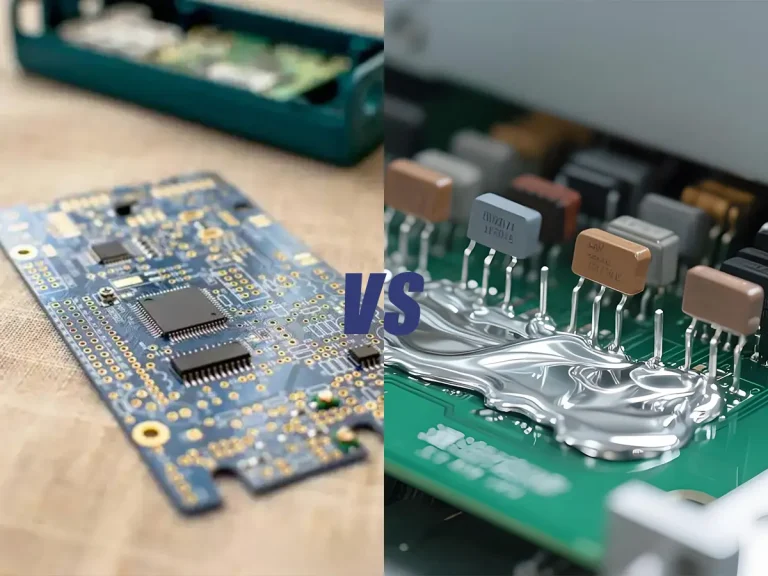
When working with electronics, one of the most important material choices you’ll make is selecting the right solder. The two main types are leaded solder and lead-free solder.
Both have advantages and disadvantages, and the best choice depends on your application, skill level, and regulatory requirements.
Let’s break it down in a simple and practical way.
What Is Leaded Solder?
Leaded solder typically contains tin (Sn) and lead (Pb). The most common formula is:
Sn63/Pb37 (63% tin, 37% lead)
This is known as a eutectic alloy, meaning it melts and solidifies at a single temperature (183°C).
Advantages of Leaded Solder
- Lower melting temperature (~183°C)
- Easier to work with
- Smooth solder flow
- Shiny, clean-looking joints
- Less stress on components
- Ideal for beginners
Disadvantages
- Contains toxic lead
- Restricted in many countries (RoHS compliance)
- Not allowed in most commercial electronics manufacturing
What Is Lead Soldering?
Lead soldering is the process of joining electronic components or conductive surfaces using a solder alloy that contains lead, typically together with tin. Common leaded electronic solders include Sn63/Pb37 and Sn60/Pb40.
Leaded solder is widely known for its relatively low melting temperature and good wetting characteristics. For example, eutectic Sn63/Pb37 melts at approximately 183°C, allowing it to flow readily when the solder joint reaches the required temperature.
This makes lead soldering relatively easy to control during manual electronics repair, prototyping, and other applications where lead-containing solder is permitted.
However, lead solder contains lead, so users must consider occupational safety, handling practices, waste disposal requirements, and applicable regulations before using it.
What Is Lead-Free Solder?
Lead-free solder replaces lead with metals like:
- Tin (Sn)
- Silver (Ag)
- Copper (Cu)
A common type is:
SAC305 (96.5% tin, 3% silver, 0.5% copper)
It melts at a higher temperature, usually around 217–220°C.
Advantages of Lead-Free Solder
- Environmentally safer
- RoHS compliant
- Required for most commercial electronics
- Strong mechanical joints
Disadvantages
- Higher melting temperature
- Harder for beginners
- Duller joint appearance
- Slightly more expensive
- Increased thermal stress on components
What Is Lead-Free Solder Made Of?
Lead-free solder is not a single alloy. It is a group of solder alloys that do not intentionally use lead as the primary alloying element. Most electronic solder is tin-based and combines tin with other metals to achieve the required melting behavior, wetting characteristics, mechanical properties, and reliability.
Common lead-free solder compositions include:
- SAC305: 96.5% tin, 3% silver, and 0.5% copper
- Tin-copper alloys: Primarily tin with copper, often used where a lower-cost lead-free alloy is preferred
- Other specialized alloys: Some applications use bismuth, antimony, or other alloying elements to modify melting behavior or mechanical performance
SAC305 is one of the most widely used lead-free alloys in electronics assembly. Its melting range is typically around 217–220°C, which is higher than the 183°C melting point of eutectic Sn63/Pb37 solder.
The exact composition matters because different lead-free alloys can have significantly different melting characteristics. Therefore, soldering temperature should always be selected according to the specific solder alloy and manufacturer recommendations.
Key Differences at a Glance
| Factor | Leaded Solder | Lead-Free Solder |
|---|---|---|
| Typical alloy | Sn63/Pb37 | SAC305 and other Sn-based alloys |
| Melting behavior | Lower | Generally higher |
| Typical melting point | 183°C for Sn63/Pb37 | About 217–220°C for SAC305 |
| Hand soldering | Generally easier | Requires more process control |
| Wetting | Generally easier | More sensitive to process conditions |
| Tip temperature | Generally lower | Generally higher |
| Joint appearance | Often bright and shiny | Often more matte |
| Lead content | Contains Pb | No intentional Pb |
| RoHS suitability | Restricted for many applications | Common choice for RoHS-compliant electronics |
| Common use | Repair, legacy electronics, permitted applications | Commercial electronics manufacturing and regulated applications |
Leaded vs Lead-Free Solder: Which Should You Use?
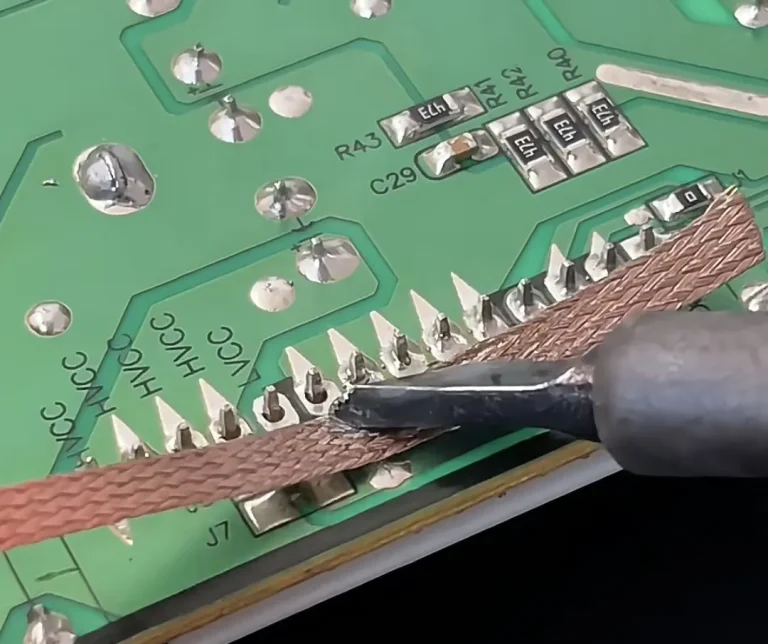
For repair work, it is also important to consider the existing solder alloy on the PCB. Mixing alloys can change the melting and wetting behavior of the joint, so technicians should understand the original solder and the requirements of the replacement process before rework.
The better solder depends on the application rather than one type being universally better.
Choose leaded solder when:
You are repairing older electronics that were originally assembled with leaded solder
You are doing hobby or prototype work where leaded solder is legally permitted
You want easier manual soldering and a lower melting temperature
Your application does not require lead-free compliance
Choose lead-free solder when:
You are manufacturing electronics subject to lead restrictions
Your product needs to meet applicable RoHS requirements
You are producing commercial electronics for markets that require lead-free materials
Environmental and material compliance is part of the product specification
Temperature Considerations
Because lead-free solder melts at higher temperatures, you typically need:
- Leaded solder: 320–350°C iron setting
- Lead-free solder: 350–380°C iron setting
Using incorrect temperature can cause:
- Cold joints
- Pad lifting
- Component damage
Precise temperature control becomes especially important when working with lead-free materials.
Why Is Lead-Free Solder Harder to Solder?
Lead-free solder can feel more difficult to use during manual soldering because many commonly used lead-free alloys require higher temperatures than eutectic tin-lead solder.
For example, Sn63/Pb37 melts at about 183°C, while SAC305 typically melts around 217–220°C. The higher melting range means the soldering system must deliver sufficient heat to the joint without overheating the surrounding PCB or components.
Beginners may notice several differences when switching from leaded to lead-free solder:
The solder may require more heat before it flows properly.
Flux can be consumed more quickly at higher working temperatures.
Temperature control becomes more important.
Solder joints may have a more matte appearance.
Poor heat transfer can result in incomplete wetting or cold joints.
These differences do not mean lead-free solder is unsuitable for manual soldering. A properly controlled soldering station, suitable tip, appropriate flux, and correct soldering technique can provide reliable results.
Appearance Differences
One common concern:
Leaded solder joints look bright and shiny, while lead-free joints appear dull or matte.
This does NOT necessarily mean a lead-free joint is bad — it simply has different physical characteristics.
Safety Tips
Regardless of solder type:
- Work in a well-ventilated area
- Use a fume extractor if possible
- Wash hands after handling solder
- Avoid direct contact with fumes
Even lead-free solder contains flux fumes that should not be inhaled.
Final Thoughts
Both leaded and lead-free solder have their place in electronics work.
- Leaded solder is easier to use and ideal for repair and hobby work.
- Lead-free solder is environmentally safer and required for modern commercial manufacturing.
Your choice should depend on your project type, regulatory requirements, and experience level.
No matter which solder you use, proper temperature control and technique are the keys to clean, reliable solder joints.
For further questions, please contact us at info@gordakelec.com.
FAQs
For many manual soldering applications, leaded solder is easier to work with because commonly used Sn-Pb alloys melt at lower temperatures and generally provide good wetting characteristics.
Eutectic Sn63/Pb37 solder melts at approximately 183°C. The soldering iron’s operating temperature will normally be higher than the alloy’s melting point because the joint must receive sufficient heat for effective soldering.
The answer depends on the alloy. SAC305, one of the most common lead-free electronics solders, has a melting range of approximately 217–220°C.
Most electronic lead-free solders are tin-based alloys. SAC305, for example, contains 96.5% tin, 3% silver, and 0.5% copper.
Neither is universally better. Lead-free solder is generally preferred or required where applicable regulations and product requirements restrict lead, while leaded solder can be easier to use in permitted repair, hobby, and legacy-electronics applications.