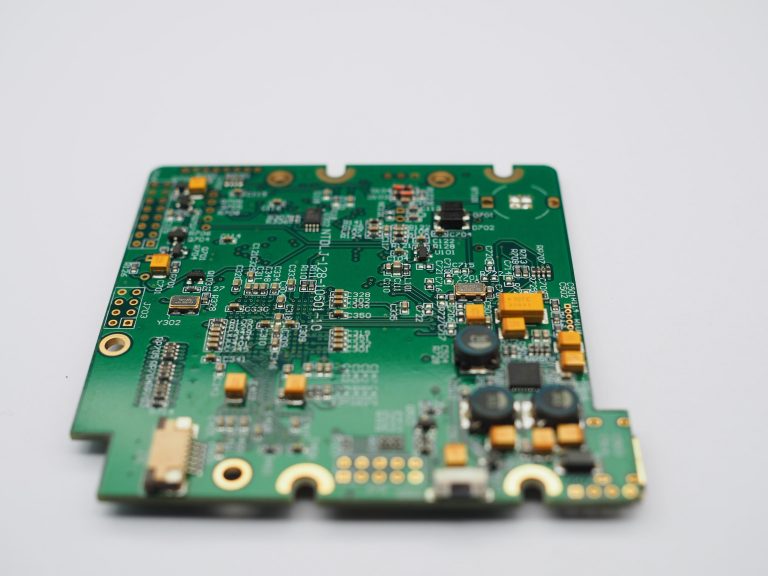
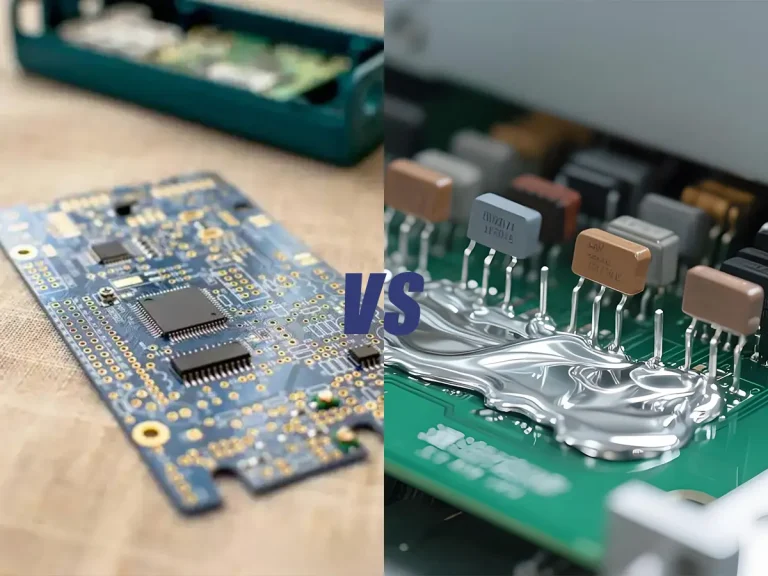
Neither through-hole nor surface mount technology is universally better. Through-hole components are generally easier to solder and more mechanically durable, while surface mount technology offers higher component density, faster automated assembly, and lower manufacturing costs for modern electronics.
The best choice depends on the application, production volume, repair requirements, and soldering method. This guide compares through-hole and surface mount technologies from the perspectives of PCB assembly, soldering difficulty, reliability, repairability, and manufacturing efficiency.
What Is Through-Hole Technology?
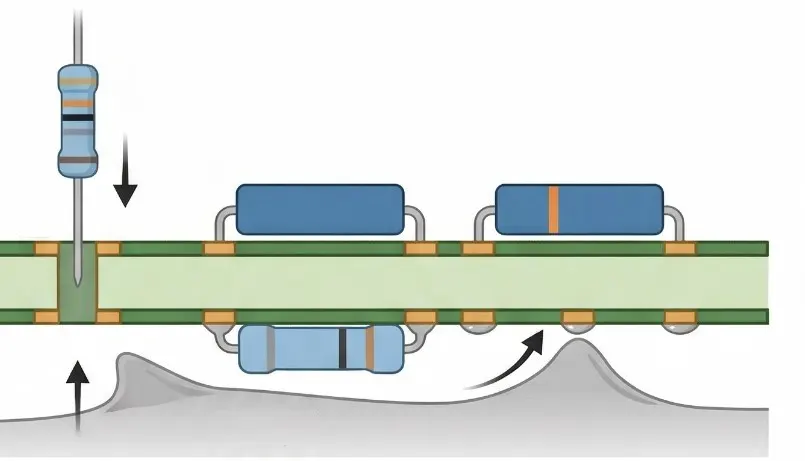
Through-hole technology (THT) uses component leads that pass through drilled holes in a PCB and are soldered on the opposite side. It offers strong mechanical connections and is commonly used for connectors, transformers, relays, and other high-stress components.
What Is Surface Mount Technology?
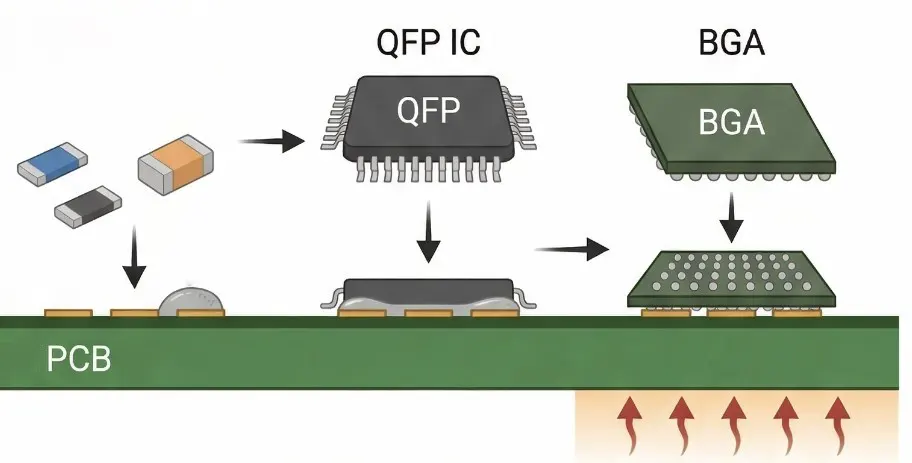
Surface mount technology (SMT) mounts components directly onto PCB pads without requiring holes. It enables higher component density, automated production, and compact electronic designs, making it the dominant assembly method in modern electronics.
Through-Hole vs Surface Mount: Key Differences
Assembly Method
Through-Hole
Components are inserted into drilled holes and soldered on the opposite side of the PCB.
Typical assembly methods include:
- Manual soldering
- Wave soldering
- Selective soldering
Surface Mount
Components are placed directly on PCB pads.
Typical assembly methods include:
- Reflow soldering
- Manual SMD soldering
- Hot air rework
PCB Space Utilization
Through-hole components occupy more board space because of:
- Larger packages
- Drilled holes
- Wider lead spacing
Surface mount components can be placed:
- Closer together
- On both PCB sides
- In higher densities
SMT clearly offers superior space efficiency.
Manufacturing Efficiency
For high-volume production:
SMT offers:
- Faster assembly
- Greater automation
- Lower labor requirements
THT generally requires more manual operations and longer assembly times.
As production volume increases, SMT becomes increasingly advantageous.
Mechanical Strength
This is one area where THT still maintains a significant advantage.
Components exposed to:
- Pulling forces
- Vibration
- Repeated mechanical stress
often perform better with through-hole mounting.
Examples include:
- Power connectors
- Industrial control equipment
- Automotive electronics
- Heavy transformers
Surface mount parts can be extremely reliable, but they are not always ideal for high-stress mechanical applications.
Which Is Easier to Solder?
For most beginners, through-hole soldering is easier to learn than surface mount soldering.
The larger components and solder joints provide more room for error, making it easier to develop fundamental soldering skills.
Why Through-Hole Is Easier for Beginners
Through-hole components offer several advantages during manual assembly:
- Larger pads
- Larger component leads
- Easier positioning
- Easier inspection
- Lower risk of solder bridges
Most soldering practice kits are designed around through-hole components for these reasons.
A beginner can often achieve acceptable solder joints after only a short period of practice.
Why SMT Can Be More Challenging
Surface mount components require greater precision.
Challenges include:
- Smaller solder joints
- Fine-pitch IC pins
- Component alignment
- Higher dependence on flux
- Increased use of magnification
As component sizes decrease from 0805 to 0603, 0402, or smaller, manual handling becomes increasingly difficult.
Does SMT Always Require More Skill?
Not necessarily.
Many common SMT packages are surprisingly easy to solder.
Examples include:
- 1206 resistors
- 0805 resistors
- SOIC ICs
- SOT transistors
With a temperature-controlled soldering station and proper flux, these packages can often be soldered almost as easily as through-hole components.
The difficulty increases significantly when working with:
- TQFP packages
- QFN packages
- BGA devices
Which Is Better for PCB Repair?
The answer depends on the type of repair.
Through-Hole Repair Advantages
Through-hole components are usually easier to:
- Remove
- Replace
- Inspect
- Troubleshoot
Individual leads can often be desoldered using:
- Solder wick
- Desoldering pumps
- Desoldering stations
This makes component replacement relatively straightforward.
SMT Repair Advantages
Surface mount components are generally easier to replace when:
- The board is densely populated
- Components are very small
- Hot air rework equipment is available
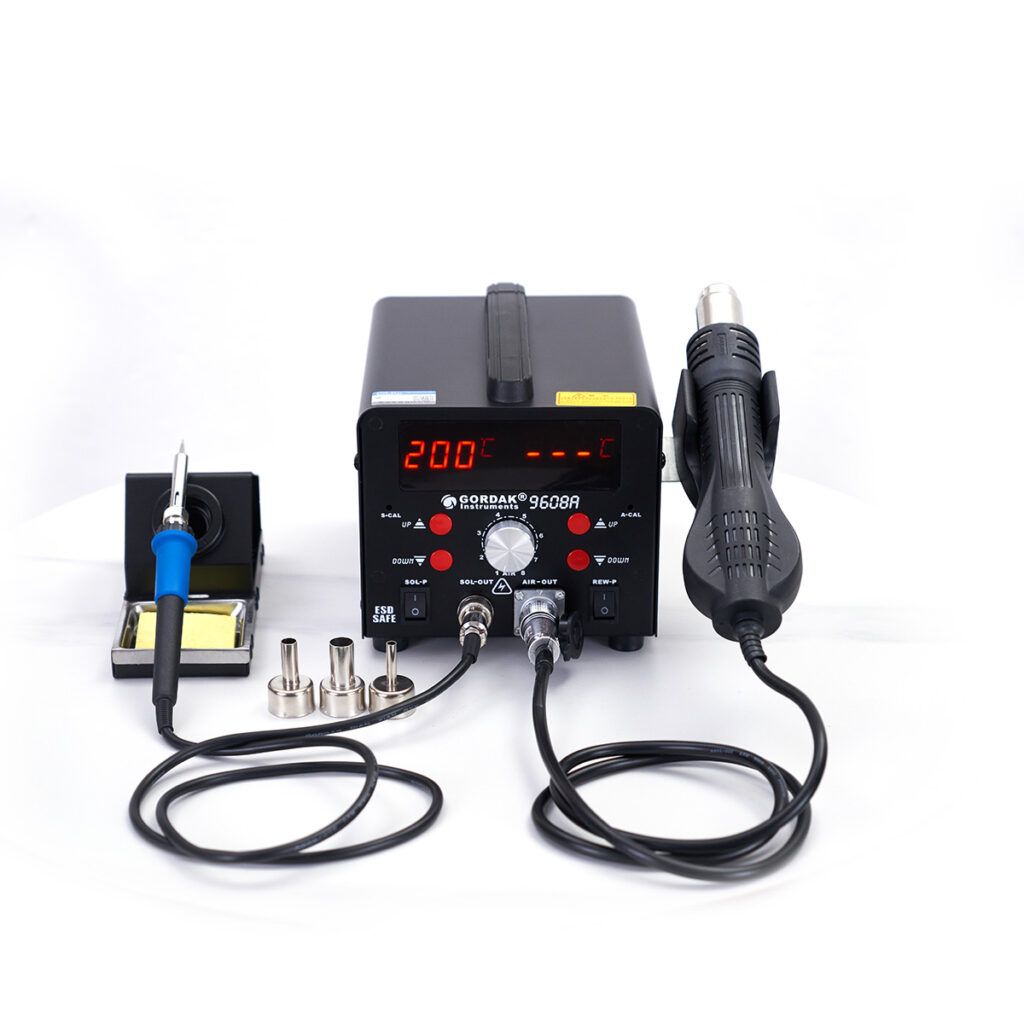
Modern repair technicians frequently use hot air stations to remove and replace SMT components quickly.
Which Is Easier to Replace?
For simple components:
- Through-hole is often easier.
For modern integrated circuits:
- SMT may actually be easier.
Removing a 100-pin through-hole connector can be far more difficult than replacing a QFP IC using proper hot air equipment.
Equipment Required for THT and SMT Soldering
The equipment requirements for each technology are different.
Through-Hole Soldering Equipment
Typical tools include:
- Soldering station
- Solder wire
- Flux
- Desoldering pump
- Desoldering station
- Side cutters
Most through-hole work can be completed using a standard temperature-controlled soldering station.
Surface Mount Soldering Equipment
SMT assembly often benefits from additional tools.
Common equipment includes:
- Soldering station
- Hot air rework station
- Precision tweezers
- Flux
- Magnification equipment
- Solder paste
As package complexity increases, hot air becomes increasingly important.
Why Hot Air Is Important for SMT
Hot air rework stations provide several advantages:
- Even heating
- Multi-pin reflow
- Easier IC removal
- Better QFN installation
For professional SMT repair, a hot air station is often considered essential.
Why Modern PCBs Use Both Technologies
Many people assume SMT has completely replaced through-hole technology.
In reality, most modern PCBs use both.
This approach is commonly called mixed-technology assembly.
Components Commonly Kept as Through-Hole
Even highly modern electronics often use through-hole mounting for:
- Power connectors
- AC input connectors
- Large capacitors
- Relays
- Transformers
- Terminal blocks
These components benefit from increased mechanical strength.
Components Commonly Designed as SMT
Most other components are surface mount devices, including:
- ICs
- Resistors
- Capacitors
- Sensors
- LEDs
- Communication modules
Combining both technologies allows engineers to optimize performance, reliability, and manufacturing efficiency.
Through-Hole vs Surface Mount for Beginners
Many newcomers wonder which technology they should learn first.
Start with Through-Hole
Through-hole soldering is usually the best starting point because it teaches:
- Heat transfer
- Solder flow
- Joint inspection
- Proper soldering technique
The larger components make mistakes easier to identify and correct.
Transition to SMT
Once basic soldering skills are developed, moving to SMT becomes much easier.
A practical progression is:
- Through-hole kits
- 1206 SMT components
- 0805 SMT components
- SOIC ICs
- Fine-pitch packages
This approach helps build confidence while gradually introducing more advanced techniques.
When to Choose Through-Hole Technology
Through-hole components are often the better choice when:
- Mechanical strength is critical
- Components experience vibration
- High-current connections are required
- Frequent plugging and unplugging occurs
- Easy manual assembly is desired
Typical applications include:
- Industrial controls
- Power electronics
- Automotive systems
- Educational kits
- Prototyping
When to Choose Surface Mount Technology
SMT is usually preferred when:
- PCB size must be minimized
- High-volume production is planned
- High-frequency performance is required
- Automated assembly is desired
- Product weight must be reduced
Typical applications include:
- Consumer electronics
- Mobile devices
- Networking equipment
- IoT devices
- Medical electronics
FAQs
Neither technology is universally better. SMT excels in size, production efficiency, and circuit density, while through-hole offers superior mechanical strength and easier manual assembly.
SMT allows manufacturers to produce smaller, lighter, and more complex electronic products while reducing assembly costs in high-volume production.
For mechanically stressed components, through-hole is often more durable. For most electronic circuits, properly assembled SMT components are highly reliable and widely used in industrial applications.
Yes. Many SMT packages such as 0805 resistors and SOIC ICs are beginner-friendly when proper tools and flux are used.
Not always. With a hot air rework station, many SMT components can be removed and replaced efficiently.
Connectors experience mechanical forces during insertion and removal. Through-hole mounting provides stronger physical support than surface mount attachment alone.
Yes. Many products combine SMT and through-hole technologies to balance manufacturing efficiency and mechanical reliability.
Conclusion
Through-hole and surface mount technologies each play important roles in modern electronics. Through-hole components remain valuable for applications requiring mechanical strength, simple assembly, and easy repair, while SMT dominates modern manufacturing because of its compact size, automation compatibility, and cost efficiency.
Rather than replacing one another, these technologies often work together on the same PCB. Understanding the strengths and limitations of each helps engineers, technicians, and manufacturers select the most appropriate solution for their specific application.
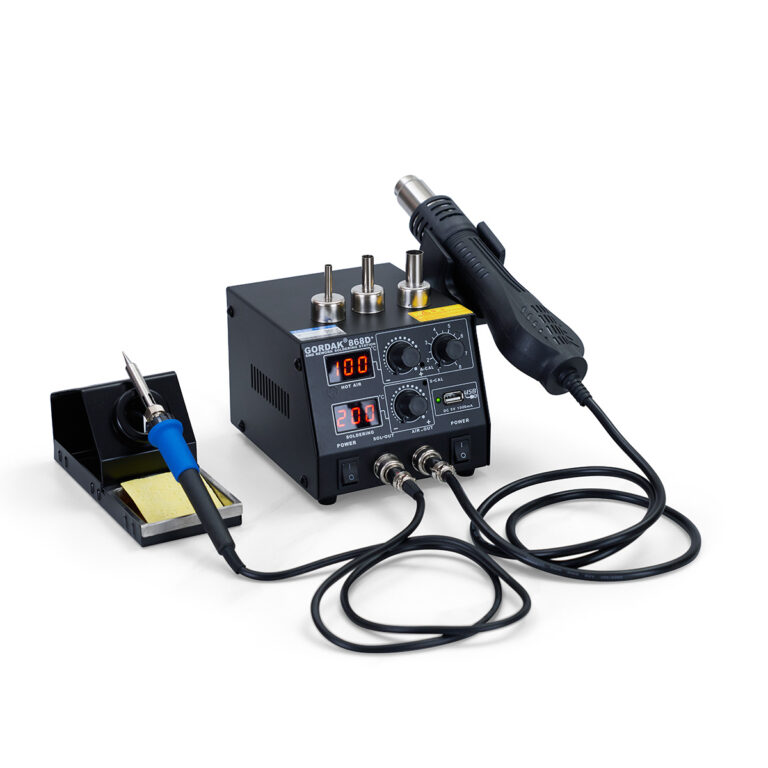
Professional Soldering and Rework Solutions from GORDAK
Whether you work with through-hole assemblies, SMT production, PCB repair, or electronics rework, reliable equipment is essential for consistent results.
GORDAK provides professional soldering stations, hot air rework stations, desoldering equipment, and integrated repair solutions designed for electronics manufacturing and maintenance.
For OEM/ODM cooperation and distributor inquiries, contact info@gordakelec.com.