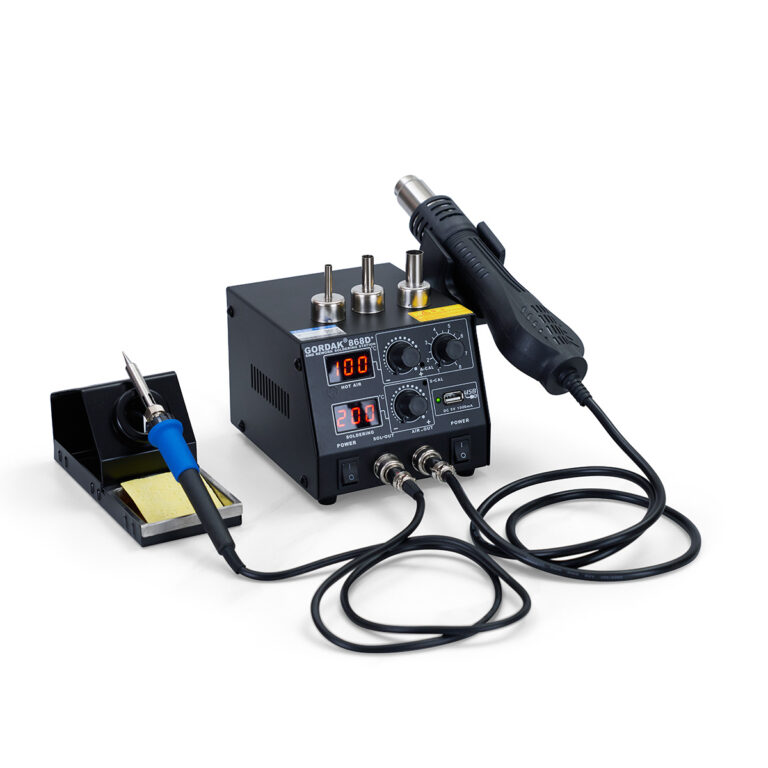
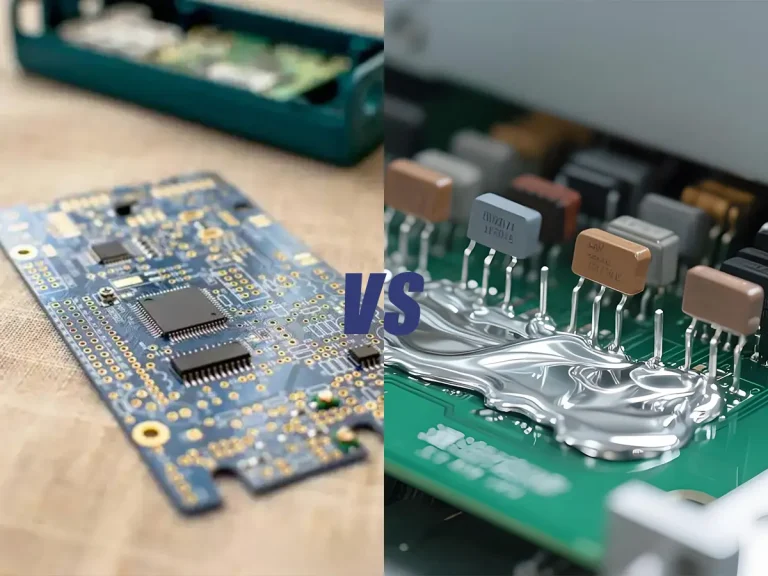
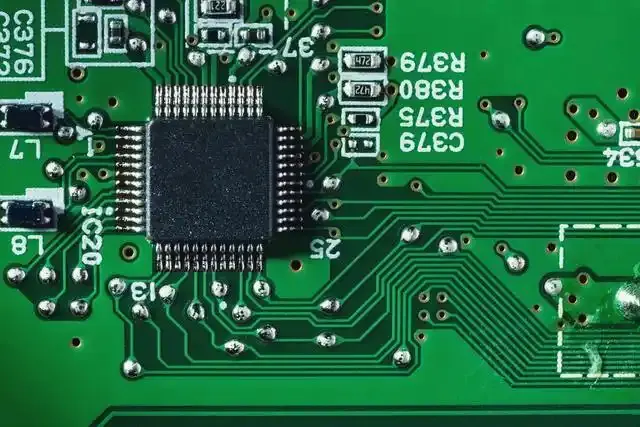
An SMD rework station is a specialized tool used to remove, replace, and repair surface mount components on printed circuit boards (PCBs) through controlled heating. Unlike a standard soldering iron, an SMD rework station can apply precise heat to small and complex components such as ICs, QFPs, QFNs, and other fine-pitch devices without damaging surrounding areas.
As electronic devices become smaller and PCB designs become more compact, SMD rework stations have become essential equipment for electronics repair, PCB prototyping, and manufacturing rework processes.
This guide explains how SMD rework stations work, their applications, key features, and how to select the right equipment for different repair requirements.
What Is an SMD Rework Station?
An SMD rework station is a type of electronic repair equipment designed specifically for working with surface mount devices (SMDs) on PCBs.
Unlike through-hole components, SMD components are mounted directly onto the surface of a circuit board. Their small size and dense placement make traditional soldering methods more difficult, especially when repairing multi-pin components.
An SMD rework station uses controlled heat to:
- Remove damaged SMD components
- Replace defective chips
- Reflow solder joints
- Repair PCB assembly defects
- Perform prototype modifications
Depending on the design, an SMD rework station may use:
- Hot air heating
- Infrared heating
- Preheating systems
- Combined heating technologies
Among these options, hot air rework stations are the most commonly used solution for general SMD repair because they provide flexible temperature and airflow control.
How Does an SMD Rework Station Work?
The basic working principle of an SMD rework station is controlled thermal transfer.
Instead of directly contacting the component with a soldering tip, the station delivers heat to the target area until the solder reaches its melting temperature.
A typical rework process includes several steps:
1. Heating the Solder Joint
The heating system transfers thermal energy to the PCB area.
The goal is to melt the solder underneath or around the component while avoiding excessive heat exposure to nearby components.
Temperature stability is critical because insufficient heat may prevent solder from melting properly, while excessive heat can damage:
- PCB pads
- Components
- Solder mask
- Internal PCB layers
2. Removing the Component
Once the solder becomes molten, the component can be removed using:
- Tweezers
- Vacuum pickup tools
- Specialized removal tools
For multi-pin components, hot air allows all solder joints to be heated simultaneously, which is difficult to achieve with a conventional soldering iron.
3. Preparing the PCB for Replacement
After removing the component, technicians usually:
- Clean residual solder
- Apply fresh flux
- Inspect PCB pads
- Prepare the surface for the replacement component
Proper preparation helps ensure reliable solder joints during reinstallation.
4. Reflowing the New Component
The replacement component is positioned on the PCB and heated until the solder melts and forms reliable connections.
Controlled heating helps achieve:
- Proper solder wetting
- Uniform solder joints
- Reduced risk of component damage
SMD Rework Station vs. Soldering Iron: What Is the Difference?
A common question is whether an SMD rework station can replace a traditional soldering iron.
The answer depends on the type of work.
| Feature | SMD Rework Station | Soldering Iron |
|---|---|---|
| Heating method | Hot air or infrared | Direct contact tip |
| Best for | SMD components, ICs, fine-pitch devices | Through-hole and simple solder joints |
| Multi-pin components | Excellent | Difficult |
| Component removal | Fast and efficient | Limited |
| Precision work | High with proper settings | Excellent for individual joints |
| Learning difficulty | Higher | Lower |
A soldering iron remains useful for many repair tasks, especially:
- Through-hole components
- Wire soldering
- Connector repair
- Individual solder joints
However, SMD rework stations provide significant advantages when working with:
- Small components
- Multiple solder joints
- Components with exposed pads underneath
- Dense PCB layouts
For many professional repair environments, both tools are used together rather than replacing one with the other.
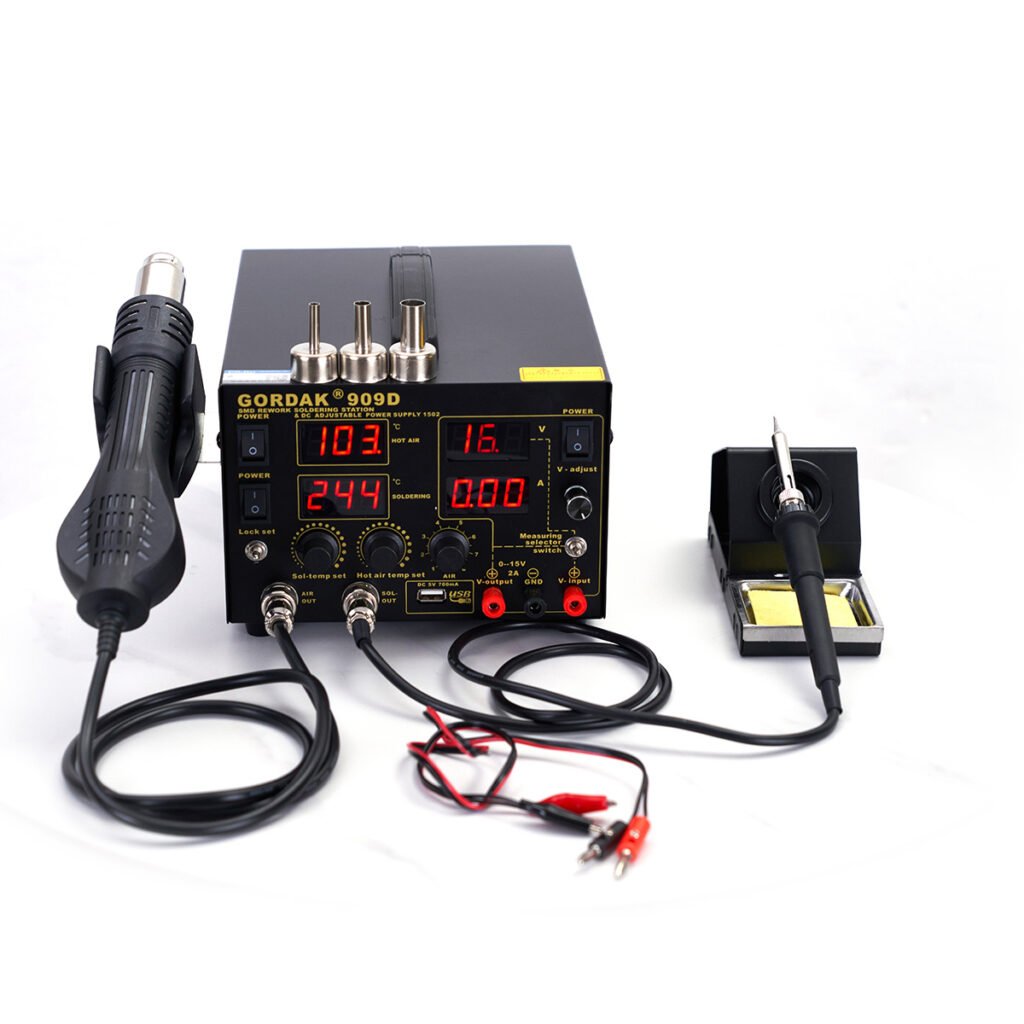
What Components Can Be Reworked with an SMD Rework Station?
SMD rework stations are suitable for a wide range of surface-mounted components.
Chip Components
Small passive components such as:
- Resistors
- Capacitors
- Inductors
can often be removed and replaced using hot air or precision soldering tools.
SOIC and SOP Packages
These integrated circuits have multiple leads on two sides.
A rework station allows all solder joints to be heated evenly, reducing the risk of damaging the PCB during removal.
QFP Components
Quad Flat Packages contain leads on four sides.
Because of their large number of pins, removing them with a standard soldering iron is difficult.
Hot air rework provides more uniform heating across the component.
QFN Components
QFN packages have hidden solder pads underneath the component.
Since the solder connections cannot be accessed directly with a soldering tip, controlled heating from below or above is often required.
BGA Components
BGA components require more advanced equipment because solder balls are located beneath the package.
Professional BGA repair usually involves:
- Precise temperature profiles
- Preheating systems
- Controlled heating zones
- Advanced inspection methods
Basic hot air stations may not be sufficient for complex BGA rework.
Types of SMD Rework Stations
Different SMD rework systems are designed for different levels of repair work.
Hot Air Rework Stations
Hot air stations use heated airflow to transfer heat to PCB components.
Advantages include:
- Flexible application
- Adjustable temperature
- Adjustable airflow
- Suitable for many SMD packages
They are widely used in:
- Electronics repair
- PCB prototyping
- Laboratory work
- Small-batch production
Infrared Rework Stations
Infrared systems use infrared radiation to heat components.
Advantages:
- Reduced airflow disturbance
- Suitable for sensitive components
- More controlled heating areas
They are commonly used in professional repair environments.
Hybrid Rework Stations
Hybrid systems combine different heating methods, such as:
- Bottom preheating
- Hot air
- Infrared heating
They are designed for complex PCB repair where precise thermal control is required.
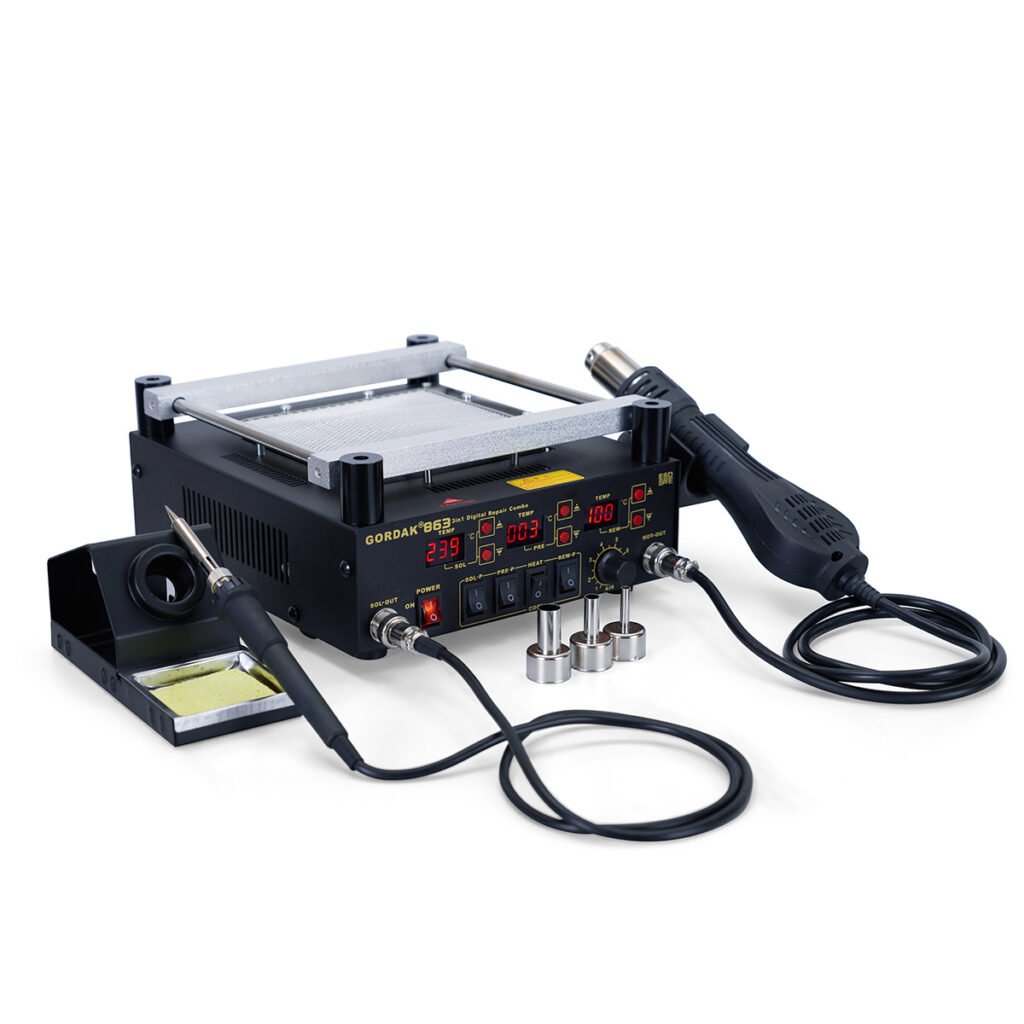
Key Features to Consider When Choosing an SMD Rework Station
Selecting the right SMD rework station depends on the type of components you repair and the level of precision required.
Temperature Control Accuracy
Stable temperature control is one of the most important factors.
A quality rework station should provide:
- Accurate temperature adjustment
- Fast thermal recovery
- Stable output during operation
Unstable temperature can cause:
- Incomplete solder melting
- PCB overheating
- Component damage
Adjustable Airflow
Airflow control is essential when working with small SMD components.
Excessive airflow may:
- Move nearby components
- Affect heating accuracy
- Blow away lightweight parts
Low and controlled airflow is usually preferred for precision repair.
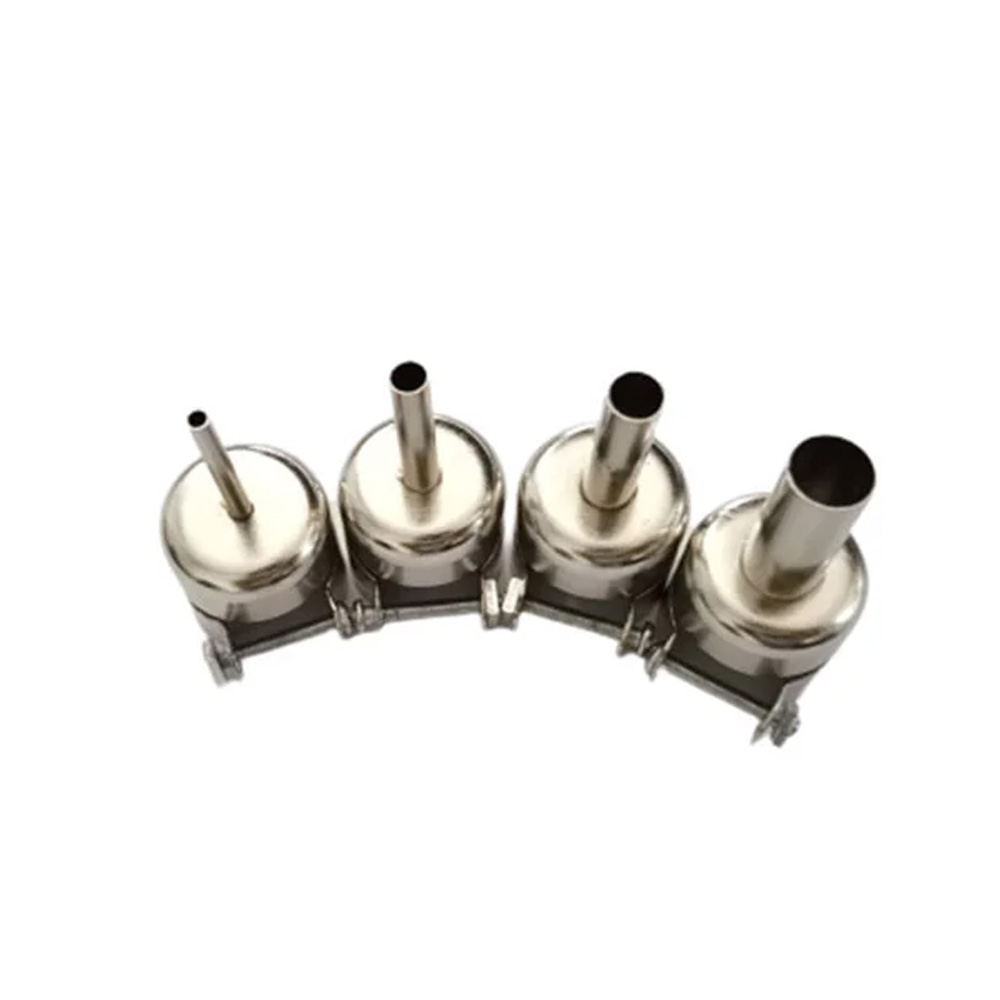
Nozzle Selection
Different component sizes require different nozzle designs.
Proper nozzle selection improves:
- Heating efficiency
- Temperature distribution
- Component protection
A larger nozzle may be suitable for larger IC packages, while smaller nozzles provide better control for compact components.
Heating Power
Higher heating power is useful for:
- Multilayer PCBs
- Large ground planes
- High thermal mass boards
However, more power does not always mean better performance. Controlled heat delivery is more important than maximum output.
Common Applications of SMD Rework Stations
SMD rework stations are widely used in industries where PCB repair, modification, and component replacement are required.
Electronics Repair
One of the most common applications is repairing damaged or defective electronic devices.
Technicians use SMD rework stations to replace:
- Damaged IC chips
- Failed capacitors and resistors
- Faulty connectors
- Power management components
Compared with replacing an entire PCB, component-level repair can significantly reduce maintenance costs and electronic waste.
PCB Prototyping and Development
During product development, engineers often need to modify PCB designs quickly.
SMD rework stations allow engineers to:
- Replace prototype components
- Test alternative chips
- Modify circuit designs
- Correct assembly mistakes
This flexibility is especially valuable during the testing and debugging stages.
PCB Assembly Rework
During manufacturing, some assembled PCBs may require correction due to:
- Incorrect component placement
- Soldering defects
- Missing components
- Failed inspection results
An SMD rework station allows manufacturers to repair boards without discarding complete assemblies.
Mobile Device and Consumer Electronics Repair
Modern consumer electronics rely heavily on SMD technology because of their compact designs.
Common repair applications include:
- Smartphones
- Tablets
- Laptops
- Cameras
- Gaming devices
- Smart home products
Because these products contain dense PCB layouts and small components, precise heat control is essential.
Common Mistakes When Using an SMD Rework Station
Although SMD rework stations provide precise heating control, incorrect operation can still damage PCBs and components.
Using Excessive Temperature
A higher temperature does not always mean faster or better rework.
Excessive heat may cause:
- Lifted PCB pads
- Burned solder mask
- Damaged components
- PCB delamination
The correct approach is to use sufficient heat with proper airflow and heating time.
Applying Too Much Airflow
High airflow can create problems when working with small components.
It may:
- Move nearby components
- Disturb solder paste
- Reduce heating accuracy
Controlled airflow is especially important for fine-pitch components.
Ignoring PCB Preheating
Large or multilayer PCBs can absorb significant heat before solder reaches melting temperature.
Without preheating, technicians may need to apply excessive top heat, increasing the risk of PCB damage.
Preheating helps:
- Reduce thermal stress
- Improve solder melting consistency
- Shorten heating time
Using the Wrong Nozzle Size
A nozzle that is too large may heat unnecessary areas.
A nozzle that is too small may require longer heating time.
Choosing the correct nozzle improves both efficiency and component protection.
Removing Components Before Solder Fully Melts
Trying to force a component off the PCB before the solder is completely molten can damage:
- PCB pads
- Component leads
- Copper traces
The component should be removed only after the solder joints have fully reflowed.
How to Use an SMD Rework Station Properly
A professional SMD rework process usually follows a controlled workflow.
Step 1: Inspect the PCB
Before heating, identify:
- Component type
- PCB condition
- Nearby sensitive components
- Required temperature range
Understanding the board layout helps prevent unnecessary damage.
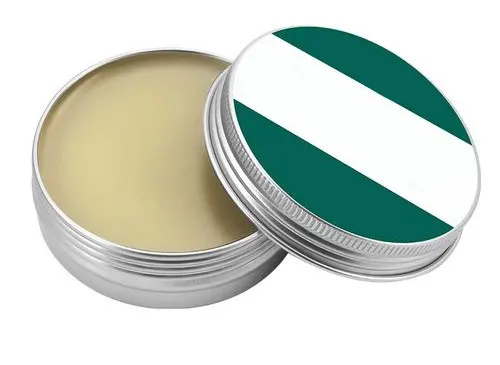
Step 2: Apply Flux
Flux improves solder flow by:
- Reducing oxidation
- Improving wetting
- Helping solder melt more evenly
Applying the correct amount of flux makes component removal and replacement easier.
Step 3: Set Temperature and Airflow
Temperature and airflow should be adjusted based on:
- Component size
- PCB thickness
- Solder type
- Thermal mass
Avoid using maximum settings unless the application requires them.
Step 4: Heat the Component Area
Move the hot air nozzle evenly around the component.
Avoid concentrating heat in one small area for too long.
Uniform heating reduces the risk of:
- Uneven solder melting
- PCB damage
- Component stress
Step 5: Remove or Replace the Component
Once solder has melted:
- Remove the component carefully
- Clean remaining solder
- Inspect PCB pads
- Install the replacement component
After replacement, inspect the solder joints to ensure proper connection.
SMD Rework Station Maintenance Tips
Proper maintenance improves equipment performance and extends service life.
Clean the Nozzles Regularly
Residue buildup can affect airflow and heating performance.
Keep nozzles clean to maintain consistent heat distribution.
Check Temperature Accuracy
Over time, heating systems may experience calibration changes.
Regular temperature checks help maintain reliable rework results.
Maintain Airflow Performance
Blocked filters or airflow paths can reduce heating efficiency.
Regular inspection helps prevent unstable operation.
Store Equipment Properly
When not in use:
- Allow the station to cool down
- Keep nozzles clean
- Protect the heating handle
- Avoid dust accumulation
FAQs
An SMD rework station is used to remove, replace, and repair surface mount components on PCBs. It is commonly used for IC replacement, PCB repair, prototype modification, and manufacturing rework.
No. An SMD rework station and soldering iron serve different purposes. A soldering iron is better for individual solder joints and through-hole components, while an SMD rework station is designed for multi-pin and surface-mounted components. Many professional technicians use both tools together.
The correct temperature depends on: Solder alloy, Component type, PCB structure, Airflow setting.
There is no universal temperature setting for all SMD components. Controlled heating and proper technique are more important than simply increasing temperature.
Basic hot air stations are generally not designed for complex BGA rework.
Professional BGA repair usually requires specialized equipment with: Bottom heating, Precise thermal profiles, Advanced temperature control, Inspection systems.
There is a learning curve because users must understand temperature control, airflow, and component behavior.
However, with proper training and practice, SMD rework stations can become essential tools for electronics repair and PCB assembly.
Conclusion
An SMD rework station is an essential tool for repairing and modifying modern PCBs with surface-mounted components. Compared with traditional soldering tools, it provides controlled heating that makes it possible to work on complex components such as ICs, QFPs, QFNs, and other fine-pitch devices.
Choosing the right SMD rework station depends on your applications, component types, and required precision. Features such as stable temperature control, adjustable airflow, suitable heating power, and nozzle flexibility are critical for achieving reliable rework results.
For OEM/ODM cooperation and distributor inquiries, contact info@gordakelec.com.