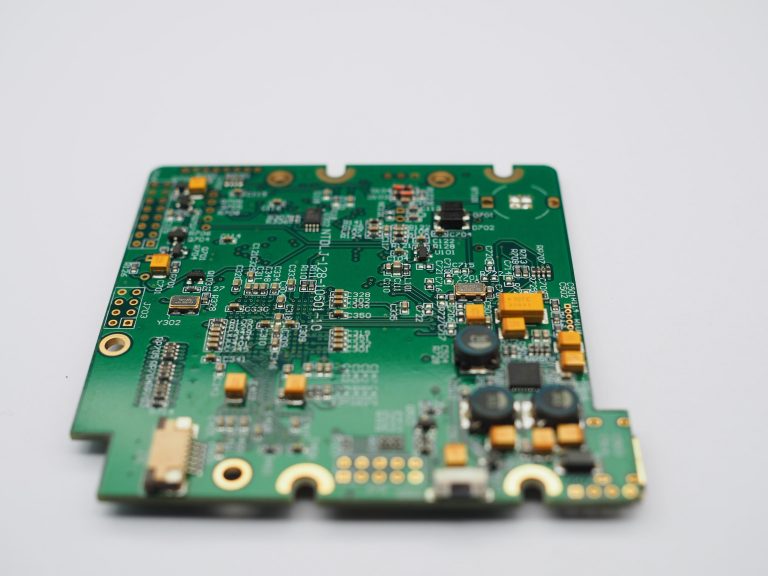
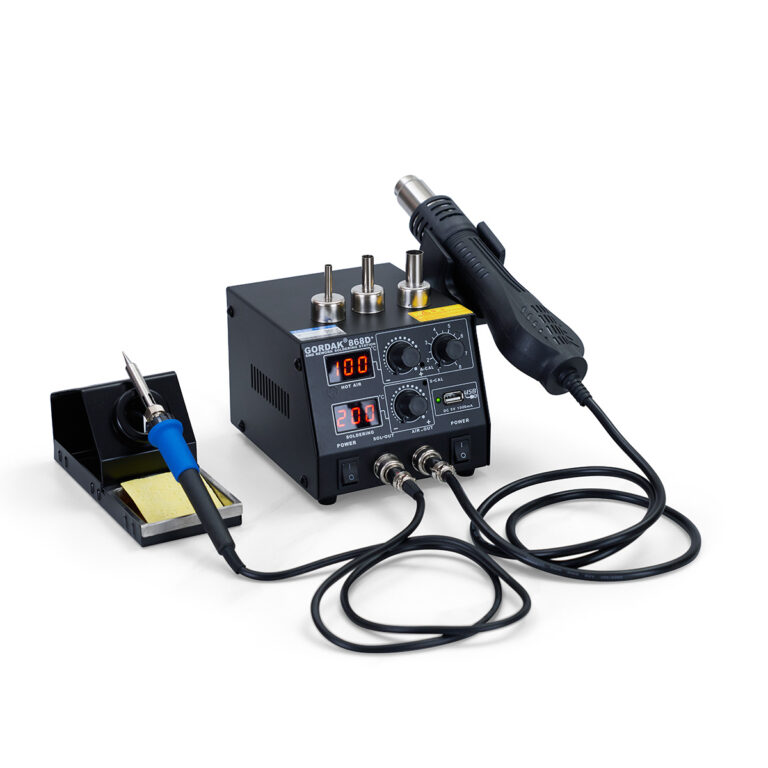
A PCB preheater gradually heats a printed circuit board before soldering, desoldering, or electronic rework. By raising the board temperature in a controlled way, a preheater reduces temperature differences across the PCB and makes localized heating easier to manage.
PCB preheating is especially useful for multilayer boards, large ground planes, large copper areas, and components with high thermal mass. It can help reduce thermal stress, improve heat transfer, and make demanding soldering and desoldering operations more consistent.
What Is a PCB Preheater?
A PCB preheater, also called a preheater station or PCB preheating station, is a heating device used to warm a circuit board before localized soldering or rework.
Unlike a soldering iron, which transfers heat directly through its tip, a preheater heats a broader area of the PCB. Depending on the equipment, heating may be provided through hot air, infrared radiation, or another controlled heating method.
The purpose is not simply to make the PCB hot. Instead, preheating establishes a more controlled thermal condition before the technician applies concentrated heat to a specific component or solder joint.
This becomes particularly important when a PCB contains multiple layers or large copper areas that can quickly absorb and dissipate heat.
How Does a PCB Preheater Work?
A PCB preheater gradually transfers heat to the board before the main soldering or desoldering operation.
The basic process is:
Room Temperature → Gradual Heating → Preheat/Soak → Localized Rework → Controlled Cooling
As the PCB temperature rises, the temperature difference between the target area and the surrounding board becomes smaller. The technician can then use a soldering iron or hot air rework station to apply localized heat without relying entirely on the rework tool to raise a cold board to working temperature.
For demanding rework, controlled heating is more important than simply selecting the highest available temperature. Professional preheating systems can use temperature profiles and thermocouples to monitor and control the heating process. JBC, for example, specifically recommends controlled temperature profiles for multilayer PCBAs and boards with large ground planes.
Why Do You Need a Preheater for PCB Rework?
A cold PCB can create a significant thermal challenge during localized rework.
When a soldering iron or hot air tool heats only one small area, the target area may become much hotter than the surrounding board. Large copper planes and internal PCB layers can also draw heat away from the solder joint.
As a result, the technician may need to apply more localized heat or spend more time heating the component.
Preheating changes this thermal condition by warming the PCB before the localized rework begins.
A preheater can be particularly useful when working with:
- Multilayer PCBs
- Large ground planes
- Large copper areas
- High-density circuit boards
- Large connectors
- BGA and other thermally demanding packages
- Components with high thermal mass
- Lead-free soldering and rework
- Large PCB assemblies
JBC similarly identifies multilayer PCBAs and large ground planes as key applications where preheating helps reduce thermal shock and facilitate soldering and desoldering.
Major Advantages of Using a Preheater Station
1. Reduces Thermal Shock
One of the most important advantages of PCB preheating is reducing sudden temperature differences during rework.
Applying intense localized heat to a relatively cold PCB can create a large thermal gradient between the heated area and the surrounding board. Different materials and structures within the assembly may respond differently to this rapid temperature change.
Gradual preheating reduces this temperature difference before localized heat is applied.
This is particularly valuable when reworking multilayer boards, large PCB assemblies, and temperature-sensitive components.
Professional soldering guidance from JBC notes that controlled PCB preheating can reduce thermal stress, particularly during rework of multilayer boards and assemblies with large ground planes.
2. Improves Heat Distribution
A preheater distributes heat across a larger portion of the PCB rather than concentrating all the energy on one solder joint.
This is especially helpful when a board contains large copper areas.
Copper conducts heat efficiently, so a large copper plane can quickly draw heat away from the target solder joint. This can make localized soldering and desoldering more difficult.
By raising the overall PCB temperature first, the preheater reduces the thermal load that the soldering iron or hot air station has to overcome.
The result is more controlled and predictable localized heating.
3. Makes Soldering and Desoldering Easier
Preheating can make difficult soldering and desoldering operations easier because the PCB and surrounding area are already warm before the technician begins localized rework.
This can be especially useful for:
- Removing large components
- Desoldering connectors
- Working on multilayer boards
- Reworking large copper pads
- Removing components from ground planes
- BGA-related rework
A preheater does not replace the soldering iron or hot air station. Instead, it prepares the board so the primary rework tool can work more effectively.
4. Helps Reduce Excessive Localized Heating
Without preheating, a technician may compensate for heat loss by increasing the temperature or heating time of the localized rework tool.
That approach can make the process harder to control.
Preheating raises the PCB temperature beforehand, allowing the localized tool to work under less demanding thermal conditions.
This does not mean that a preheater automatically allows every soldering process to use a lower temperature. The correct settings depend on the PCB, solder alloy, component specifications, and thermal profile.
The key benefit is improved thermal control rather than simply lowering the temperature.
5. Supports More Consistent Rework
Temperature consistency becomes increasingly important when the same PCB rework operation must be repeated.
A controlled preheating process can provide a more consistent starting condition before each localized soldering or desoldering operation.
This is particularly useful for:
- Repair technicians
- Electronics service centers
- PCB rework stations
- Production environments
- Repetitive component replacement
Advanced preheaters can use temperature profiles and thermocouples to monitor the PCB during heating. Some professional systems also provide programmable profiles for repeated applications.
When Should You Use a PCB Preheater?
A preheater is not necessary for every soldering task.
For a small through-hole joint on a low-mass PCB, a suitable soldering iron may be sufficient.
A PCB preheater becomes more useful when the board or component presents a higher thermal load.
Consider using a preheater when:
- The PCB has multiple layers.
- The board contains a large ground plane.
- Large copper areas quickly dissipate heat.
- You are working with large connectors.
- You are removing or installing components with high thermal mass.
- Localized hot air cannot heat the target area efficiently.
- You need to reduce the thermal gradient during rework.
- You perform repeated PCB rework operations.
- You need more consistent heating between jobs.
The larger and more thermally demanding the PCB assembly, the more useful controlled preheating can become.
Do You Need a Preheater for Every PCB?
No.
A preheater is a supporting tool rather than a mandatory part of every soldering setup.
For simple soldering work, such as a small through-hole connection or a low-mass component on a relatively small PCB, a soldering iron may provide sufficient heat.
Preheating becomes more valuable when heat is difficult to transfer to the target solder joint. Multilayer construction, large ground planes, thick copper, and large components can all increase the thermal load.
The goal is to use a preheater when it improves thermal control, not to preheat every PCB unnecessarily.
PCB Preheater vs. Hot Air Rework Station
A PCB preheater and a hot air rework station serve different purposes.
| Feature | PCB Preheater | Hot Air Rework Station |
|---|---|---|
| Main purpose | Gradually heat the PCB | Apply localized heated air |
| Heating area | Broad | Localized |
| Main application | Thermal preparation | Soldering and desoldering |
| Multilayer PCB | Very useful | Useful |
| Large ground plane | Very useful | Can be challenging |
| Component removal | Supporting tool | Primary tool |
| Thermal management | Reduces temperature gradients | Concentrates heat on the target |
| Typical use | Before or during rework | Directly on the target component |
For demanding PCB rework, the two tools can work together.
The preheater warms the PCB, while the hot air rework station supplies localized heat to the component being removed or installed.
This combination is particularly useful for difficult SMD and multilayer PCB applications.
Hot Air Preheater vs. IR Preheater
PCB preheaters can use different heating technologies. Two common approaches are hot air heating and infrared heating.
Hot Air Preheater
A hot air preheater transfers heat through a controlled flow of heated air.
Its advantages include:
- Broad-area heating
- Adjustable heating conditions
- Flexible application
- Suitable for different PCB sizes depending on the heating area
IR Preheater
An IR preheater transfers heat through infrared radiation.
Its performance depends on factors such as:
- PCB material
- Surface characteristics
- Heating distance
- Heating area
- IR wavelength
- Power
- Temperature control
Neither technology is automatically better for every application. The appropriate choice depends on PCB size, construction, heating requirements, and the type of rework being performed.
How to Use a PCB Preheater
The exact procedure depends on the equipment and PCB, but the basic process is straightforward.
Step 1: Secure the PCB
Place the PCB securely on the preheater or a suitable PCB support.
Make sure the board is stable and positioned correctly over the heating area.
Step 2: Select the Heating Settings
Choose the appropriate heating mode and temperature according to the PCB, components, solder alloy, and rework process.
Avoid selecting an unnecessarily high temperature simply to shorten the heating time.
Step 3: Heat the PCB Gradually
Allow the PCB temperature to increase progressively.
The purpose of preheating is to establish a controlled thermal condition rather than rapidly heat the board to an extreme temperature.
Step 4: Monitor the Temperature
If the preheater supports thermocouples or external temperature measurement, use them to monitor the actual PCB temperature.
The temperature shown on the controller may not always be identical to the temperature at the component or board surface.
Step 5: Perform Localized Rework
Once the PCB reaches the appropriate preheat condition, use a soldering iron or hot air rework station to perform the required soldering or desoldering operation.
Step 6: Allow Controlled Cooling
After rework, remove the heat source and allow the board to cool appropriately before handling it.
Avoid unnecessary mechanical stress while the PCB and components are still hot.
What Temperature Should You Use for PCB Preheating?
There is no single preheating temperature that applies to every PCB.
The appropriate temperature depends on:
- PCB construction
- Number of layers
- Solder alloy
- Component specifications
- PCB size
- Heating method
- Rework process
- Manufacturer’s thermal profile
For professional applications, follow the thermal requirements provided by the PCB, component, and solder manufacturers whenever they are available.
Do not treat a commonly used temperature as a universal standard.
For example, professional preheating systems may offer adjustable temperature ranges and programmable profiles rather than relying on one fixed setting. JBC’s preheater systems include customizable temperature profiles and thermocouple-based control for different applications.
The purpose of preheating is controlled thermal preparation, not simply reaching the highest possible temperature.
How Long Should You Preheat a PCB?
Preheating time depends on the thermal characteristics of the PCB and the performance of the preheater.
Factors include:
- PCB size
- PCB thickness
- Number of layers
- Copper content
- Component density
- Heating area
- Heating power
- Target temperature
- Heating method
A small PCB with low thermal mass may reach the desired condition relatively quickly, while a large multilayer PCB with extensive copper areas can require substantially longer.
For this reason, there is no reliable universal answer such as “preheat every PCB for five minutes.”
Instead, monitor the PCB temperature and use a controlled heating profile appropriate for the application.
Common Problems When Preheating a PCB
The PCB Heats Unevenly
Uneven heating can result from incorrect PCB positioning, an unsuitable heating area, or differences in the board’s thermal mass.
Make sure the PCB is positioned correctly and that the heating area is appropriate for its size.
The PCB Heats Too Slowly
Large PCBs and boards with substantial copper content can absorb significant amounts of heat.
Check the heating power, heating area, temperature setting, and PCB position.
Components Become Excessively Hot
Avoid unnecessary temperatures and prolonged heating.
Temperature-sensitive components should always be handled according to their specified thermal limits.
Solder Still Does Not Melt
A preheater is not necessarily designed to completely reflow every solder joint.
Its primary purpose is to prepare the PCB for localized rework. A soldering iron or hot air station may still be required to provide the final heat needed to melt the solder.
The PCB Warps During Heating
Uneven or excessive heating can increase the risk of PCB deformation.
Use controlled heating and ensure the PCB is properly supported during the process.
How to Choose a PCB Preheater
When selecting a PCB preheater station, consider more than maximum temperature.
Heating Area
Choose a heating area that matches the PCB sizes you normally work with.
A heating area that is too small may not provide adequate coverage for larger boards.
Temperature Control
Stable and adjustable temperature control is important for different PCB and rework applications.
Heating Uniformity
Uniform heating is particularly important for multilayer boards and assemblies with large copper areas.
Heating Method
Compare hot air, infrared, and other heating methods according to the type of PCB rework you perform.
Temperature Monitoring
A reliable temperature display or thermocouple connection can help you monitor the actual heating process.
PCB Support
A stable PCB support system makes positioning easier and can improve repeatability during rework.
Compatibility With Other Rework Equipment
If you regularly perform SMD or BGA rework, consider whether the preheater can be used alongside your existing hot air rework station and soldering station.
Why Is a Preheater Important for Multilayer PCBs?
Multilayer PCBs can present a greater thermal challenge because their internal copper layers can distribute heat away from the target area.
A large ground plane can have a similar effect.
When localized heat is applied to a cold board, the target solder joint may lose heat rapidly to the surrounding copper. This can make soldering and desoldering slower and less predictable.
Preheating raises the overall board temperature first, reducing the thermal difference between the target area and the surrounding PCB.
This is one reason professional manufacturers and rework technicians use preheaters for demanding multilayer PCB applications. JBC specifically identifies multilayer PCBAs and large ground planes as key preheater applications.
Preheater Station vs. Soldering Iron
A preheater and a soldering iron should not be considered interchangeable.
A soldering iron transfers heat through direct contact with the solder joint. It is ideal for localized soldering and desoldering work.
A preheater raises the temperature of a broader PCB area before or during rework.
For difficult PCB repairs, they can be used together:
Preheater → Warm the PCB → Soldering Iron → Complete the Localized Joint
This approach can make thermally demanding soldering operations easier to control.
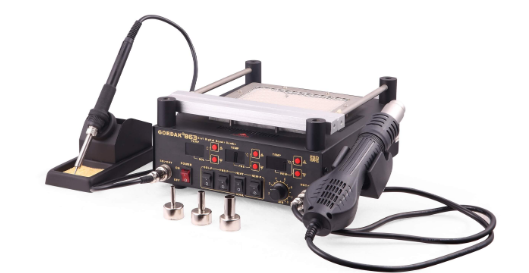
GORDAK Preheater Stations
GORDAK preheater stations are designed for PCB soldering, desoldering, and electronic rework applications where controlled preheating can improve the working conditions.
For applications involving multilayer PCBs, large copper areas, or thermally demanding components, a suitable preheater can work together with a hot air rework station or soldering station to provide a more controlled rework process.
When selecting a preheater, consider your PCB dimensions, heating requirements, temperature control needs, and the type of rework you perform.
Looking for a suitable preheater station for your PCB rework application? Contact GORDAK to discuss your requirements.
FAQs
A PCB preheater is a device used to gradually heat a circuit board before soldering, desoldering, or electronic rework.
A preheater station raises the PCB temperature before localized rework. It can help reduce thermal gradients and make soldering or desoldering easier, particularly on thermally demanding boards.
Not always. A preheater is particularly useful for multilayer PCBs, large ground planes, large copper areas, and components with high thermal mass.
Yes. The two tools are complementary. The preheater warms the PCB broadly, while the hot air station provides localized heat to the target component.
There is no universal temperature. The correct setting depends on the PCB, solder alloy, components, heating method, and applicable thermal profile.
It depends on the PCB size, thickness, copper content, heating power, heating area, and target temperature. Monitor the actual board temperature instead of relying on one fixed heating time.
A preheater warms a broader area of the PCB, while a soldering iron transfers heat directly to a specific solder joint.
A preheater provides broad-area thermal preparation, while a hot air rework station applies localized heated air for soldering and desoldering.
Preheater Stations
Features and Benefits of Preheater Rework Stations
The Impact of Preheater Station Temperature on Soldering and Desoldering Outcomes
Benefits of Using Preheater Station In Soldering Applications
Making Your Work Easier With Preheater Station
Why Preheating Stations Are Beneficial
Major Advantages of a Preheater Station
Different Uses of 3 in 1 Preheater Rework Station