烙铁头 从制作珠宝到生产电路板,烙铁的用途多种多样。因此,本部分将帮助您识别最常用的烙铁头,它最适合您可能正在使用的产品。
请继续阅读,了解更多信息。
What Are Different Soldering Iron Tips Used For?
Different soldering iron tips are designed for different soldering tasks. The shape and size of a tip affect its contact area, heat transfer, solder-holding ability, and precision. Choosing the right tip can therefore make soldering easier and help produce more consistent joints.
| Soldering Tip Type | 常见应用 | Main Advantage |
|---|---|---|
| 锥形喷嘴 | Fine electronics, small joints, precision work | Precise access |
| 凿尖 | PCB soldering, through-hole components, wires | Good heat transfer |
| 斜面尖头 | General soldering, drag soldering | Large contact area |
| Hoof Tip | Drag soldering, SMD components | Holds and distributes solder |
| 刀尖 | Drag soldering, rework, solder bridge removal | Useful for controlled solder manipulation |
| Fine Point Tip | Small components and detailed work | High precision |
| Flat Tip | Larger solder joints and heat-sensitive applications | Broad heat transfer |
A fine tip is not always the best choice. Larger tips can transfer heat more efficiently because they provide a greater contact area, while smaller tips offer better access to compact or closely spaced components.
Soldering Iron Tip Shape vs. Tip Size
Tip shape and tip size are two different factors to consider when choosing a soldering iron tip.
"(《世界人权宣言》) shape determines how the tip contacts the solder joint and where heat is delivered. The size determines the contact area and the amount of heat that can be transferred to the joint.
For example, a small chisel tip and a large chisel tip have the same basic shape but are suitable for different applications.
- Small tips provide better access to small pads and closely spaced components.
- Medium tips are suitable for general PCB soldering and everyday electronics work.
- Large tips provide greater thermal contact and are better suited to larger wires, terminals, and joints.
The best tip should be large enough to transfer sufficient heat to the joint while still providing the precision required for the work.
小贴士 Choosing the smallest possible tip is not always the best approach. If the tip cannot transfer enough heat to the joint, soldering may take longer and become more difficult.
How to Choose the Right Soldering Iron Tip
The right soldering iron tip depends on the type of joint, component size, required precision, and amount of heat needed. Instead of choosing a tip based only on its shape, consider the complete soldering task.
For General PCB Soldering
A medium chisel or bevel tip is a practical choice for general PCB soldering. Its larger contact area allows efficient heat transfer to both the pad and component lead.
For Small Electronic Components
A fine conical or small chisel tip provides better access to small pads and closely spaced components. These tips are useful when precision is more important than maximum heat transfer.
For Through-Hole Components
A chisel tip is often a good choice because it can contact both the component lead and PCB pad efficiently.
For Wire Soldering
A medium or larger chisel tip can provide the heat transfer needed for wire connections. The appropriate size depends on the wire gauge and terminal size.
For SMD and Drag Soldering
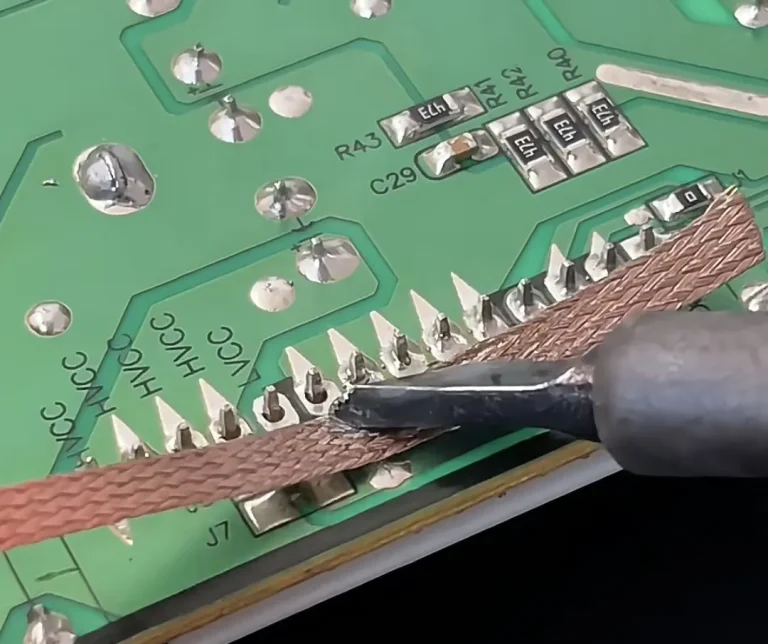
Hoof, bevel, and knife tips can hold a small amount of solder and move it across multiple closely spaced leads. This makes them useful for drag soldering and certain SMD rework applications.
For Solder Bridge Removal
A knife or appropriately sized bevel tip can help control and remove excess solder between closely spaced pads.
Soldering Tip Selection Guide
| Soldering Task | Recommended Tip | Why |
|---|---|---|
| General PCB soldering | Chisel / Bevel | Good heat transfer and control |
| Through-hole soldering | Chisel | Heats the pad and component lead efficiently |
| Fine electronics | Fine conical / small chisel | Better precision |
| SMD soldering | Fine chisel / conical | Suitable for small pads |
| Drag soldering | Hoof / Bevel / Knife | Holds and distributes solder |
| Wire soldering | Medium / large chisel | Greater thermal contact |
| Large solder joints | Large chisel / bevel | Higher heat transfer |
| Solder bridge removal | Knife / bevel | Better control of excess solder |
| Detailed rework | Fine conical / knife | Access to confined areas |
Why Does Soldering Tip Shape Matter?
Soldering tip shape affects how efficiently heat is transferred from the soldering iron to the workpiece.
A tip with a larger contact area can generally transfer more heat to a joint, while a smaller tip allows the user to reach confined areas with greater precision.
The tip shape also affects how solder behaves on the working surface.
For example:
- 锥形尖端 provide precise access to small joints.
- 凿尖 provide a broad contact surface for efficient heat transfer.
- Bevel tips can hold solder and provide a larger working surface.
- Hoof tips are useful for carrying solder during drag soldering.
- Knife tips can be useful for drag soldering and controlled rework.
Therefore, tip selection is a balance between precision, contact area, heat transfer, and solder control.
1. K- Series or Knife Tips
k- 系列烙铁的烙铁头呈倾斜状,类似于刀的形状。它在修复焊桥和拖焊方面表现出色。使用这种烙铁头进行点焊并不困难,但与其他烙铁头相比则非常困难。
2. B- Series or Conical Tips
B 系列焊头因其尖锥状而常见。由于它的焊头非常圆,可以从任何角度进行焊接,因此这种焊头被广泛使用。
3. C- Series or Bevel Tips
C 系列或斜面焊头用于拖曳焊接,因为它们可以容纳更多焊料。就像接地铅笔一样,它有一个弯曲的表面。无论是相距很远还是很近,都可以伸出焊头,在不同的点上涂抹少量的焊料。
4. D- Series or Chisel Tips
D 系列的名称源自其凿子形状。与锥形烙铁头一样,这些烙铁头也用于通用焊接。它们在焊接粗线时非常有用。
这些针尖有不同的尺寸,所以一定要选择合适的尺寸。如果选择太小的,可能无法触及所有点。太大的焊头则不利于焊锡从一个点流向另一个点,从而形成某种桥接。

5. Specialized Tips
制造商还生产一些专用烙铁头,例如铲形烙铁头,用于刮除镜面或玻璃表面(如液晶屏幕)上的紫外线胶。
6. I- Series or Needle Tips
针型烙铁非常锋利,设计用于进行非常彻底的工作,但不适用于焊接大型元件,因为与其他烙铁头相比,针型烙铁传递的热量非常低。
Selecting the Right Soldering Iron Tip
- 选择与烙铁相似的烙铁头。
- 根据您是要进行通用焊接、精细焊接还是拖曳焊接来指定类型。
- 推断或确定尺寸--如果太大,可能会损坏电路板;如果太小,可能没有足够的热量进行传输。如果您刚刚了解如何焊接,则应避免选择锥形焊头。
业余爱好者往往会施加更大的重量,试图增加焊料的流动性--这种特别的错误最终可能会毁坏电路板。
选择适合电线、脱焊、表面贴装和通孔的凿尖。
与我们合作,获取卓越的烙铁头
寻找完美的 烙铁头?如果是,请立即联系我们。您一定会惊叹于我们所提供的各种类型的士兵窍门,它们将为您的工作带来绝对的灵活性和效率。