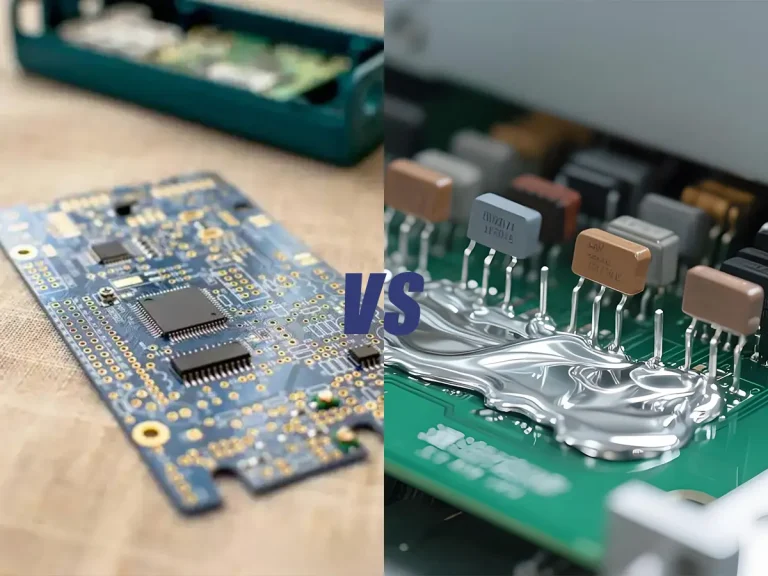
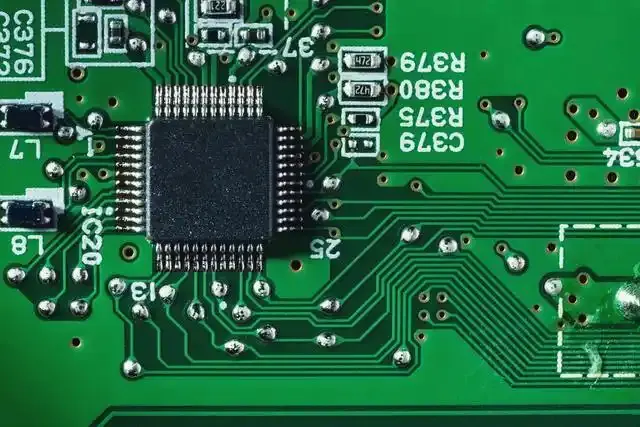
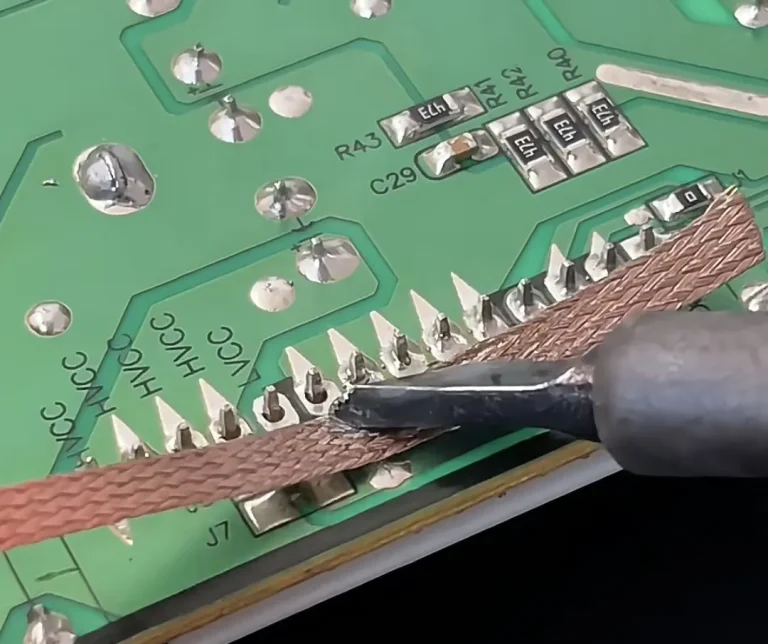
A cold solder joint is a weak solder connection caused by insufficient heat or improper wetting during soldering, resulting in poor electrical conductivity and unreliable PCB performance.
This issue is one of the most common causes of intermittent failures in electronics. It often leads to unstable signals, device malfunctions, or complete circuit failure.
Cold solder joints usually occur due to incorrect temperature, oxidation, poor flux usage, or movement during cooling. This guide explains how to identify, fix, and prevent them in PCB repair and electronics assembly.
What Is a Cold Solder Joint?
Definition
A cold solder joint is a defective solder connection where the solder has not properly melted, flowed, or bonded with the PCB pad and component lead.
Instead of forming a strong metallurgical bond, the solder remains partially solidified or poorly attached.
Cold joint vs good solder joint
A good solder joint typically has:
- Smooth and even surface
- Shiny appearance (in most cases)
- Strong mechanical and electrical connection
A cold solder joint often appears:
- Dull or matte
- Grainy or rough
- Cracked or irregular
Electrical impact
Cold solder joints are not just cosmetic issues. They can cause:
- High electrical resistance
- Intermittent signal loss
- Unstable circuit behavior
- Complete connection failure in severe cases
What Causes a Cold Solder Joint?
Cold solder joints usually result from improper soldering conditions rather than material defects.
Insufficient soldering temperature
If the temperature is too low:
- Solder does not fully melt
- Wetting is incomplete
- Bonding strength is weak
This is one of the most common causes in PCB repair work.
Poor heat transfer
Even with correct temperature settings, poor heat delivery can still cause cold joints.
Common reasons include:
- Incorrect soldering tip size
- Insufficient contact with the joint
- Large thermal mass of PCB or components
Movement during cooling
If the component moves before solder solidifies:
- The internal structure of the solder joint is disrupted
- Cracks or weak bonding may form
This is especially common in manual soldering without proper stabilization.
Oxidation on pads or leads
Oxidation forms naturally when copper is exposed to air.
It prevents solder from bonding properly, leading to:
- Weak adhesion
- Poor wetting
- Unstable joints
Lack of flux or improper flux use
Flux is essential for removing oxidation during soldering.
Without enough flux:
- Surfaces remain contaminated
- Solder cannot spread evenly
- Bonding strength is reduced
Dirty or oxidized soldering iron tip
A poorly maintained soldering tip reduces:
- 传热效率
- Wetting performance
- Overall solder quality
Signs of a Cold Solder Joint
Visual indicators
Cold solder joints often appear:
- Dull instead of shiny
- Rough or grainy
- Cracked or uneven
Physical indicators
- Loose components
- Weak mechanical stability
- Movement around soldered joints
Electrical symptoms
Cold solder joints can cause:
- Intermittent operation
- Random resets or failures
- Signal instability
- Device not powering correctly
How to Identify a Cold Solder Joint
目视检查
Use magnification tools to check PCB joints for:
- Surface texture
- Shape irregularities
- Cracks or incomplete coverage
Mechanical testing
Gently move components to detect:
- Loose connections
- Unstable solder points
Electrical testing
Use a multimeter to check:
- Continuity
- Resistance fluctuations
- Intermittent signal behavior
How to Fix a Cold Solder Joint
Step 1 – Reheat the joint properly
Apply correct soldering temperature and allow the joint to fully reflow. Proper heating restores metallurgical bonding.
Step 2 – Add flux
Apply flux to:
- Remove oxidation
- Improve solder wetting
- Stabilize heat transfer
Step 3 – Add fresh solder if needed
If the joint is insufficient, add a small amount of fresh solder to rebuild proper connection structure.
Step 4 – Clean and inspect
After rework:
- Remove flux residue if required
- Inspect joint shape and consistency
- Ensure smooth and complete bonding
How to Prevent Cold Solder Joints
Use correct soldering temperature
Always match temperature with:
- Solder type
- PCB structure
- Component size
Maintain clean soldering tip
Regular cleaning and re-tinning ensures:
- Stable heat transfer
- Proper wetting performance
Use quality flux-core solder
Good solder improves:
- Wetting behavior
- Joint consistency
- Oxidation resistance
Avoid movement during cooling
Keep components stable until solder fully solidifies.
Ensure proper heat transfer
Use correct:
- Tip size
- Contact technique
- Heating duration
Cold Solder Joints in SMD vs Through-Hole Components
SMD components
Cold solder joints in SMD work:
- Are harder to visually detect
- Often occur in fine-pitch ICs
- Require magnification for inspection
Through-hole components
These are easier to identify and often caused by:
- Insufficient heat penetration through the hole
- Poor solder flow around pin and pad
Common Mistakes That Lead to Cold Solder Joints
- Using too low temperature
- Rushing soldering process
- Skipping flux application
- Using dirty or oxidized tips
- Poor component stabilization during soldering
Why Cold Solder Joints Are Dangerous in Electronics
Cold solder joints may seem minor but can lead to:
- Intermittent system failures
- Overheating due to resistance buildup
- Long-term reliability issues
- Costly rework or product failure
FAQs
Can a cold solder joint work temporarily?
Yes, but it is unstable and may fail unexpectedly under vibration or heat changes.
How do I visually identify a cold solder joint?
Look for dull, grainy, or cracked solder surfaces instead of smooth, shiny joints.
Is a cold solder joint always dull?
Most are dull, but not all dull joints are cold—inspection and testing are needed.
Can flux fix a cold solder joint?
Flux alone cannot fix it, but it is essential for proper reflow and repair.
What temperature prevents cold solder joints?
Typically:
- 320°C–380°C depending on solder type and PCB mass
Are cold solder joints common in lead-free soldering?
Yes, because lead-free solder requires higher temperatures and has stricter wetting behavior.
结论
A cold solder joint is a weak and unreliable solder connection caused by insufficient heat, poor wetting, oxidation, or improper soldering technique.
These defects can lead to intermittent failures and reduced PCB reliability. However, with correct temperature control, proper flux usage, clean tools, and stable soldering technique, cold solder joints can be effectively prevented and repaired.
For technical support, OEM/ODM cooperation, or product inquiries, contact us at info@gordakelec.com for professional PCB soldering and rework solutions.