• +8618025978448
  • info@gordakelec.com
× 发送

Best Soldering Temperature for PCB Work

The best soldering temperature for PCB work is typically between 320°C and 380°C, depending on the solder type, PCB structure, and component size. Leaded solder usually works best at lower temperatures, while lead-free solder requires more heat due to its higher melting point.

Using the correct temperature is critical for achieving reliable solder joints, preventing PCB damage, and improving solder flow during electronics assembly and repair.

Soldering temperature directly affects heat transfer, solder wetting, and joint reliability.

If temperature is too low, solder may not flow properly. If temperature is too high, the PCB and components can become damaged.

The goal is to apply enough heat for fast and efficient solder flow without overheating the board.

Heat transfer and solder wetting

During soldering, heat must transfer efficiently from:

  • The soldering tip
  • To the PCB pad
  • And the component lead

Once the surfaces reach proper temperature, solder wets the metal surfaces and forms a stable electrical connection.

Good wetting creates:

  • Smooth solder flow
  • Strong mechanical bonding
  • Reliable conductivity

Problems caused by low temperature

Insufficient temperature often leads to:

  • Cold solder joints
  • Poor solder wetting
  • Weak electrical contact
  • Longer heating time

Long contact time can sometimes damage components even more than brief higher-temperature soldering.

Problems caused by excessive temperature

Overheating may cause:

  • PCB pad lifting
  • Burned flux
  • Faster oxidation
  • Component damage
  • Shortened tip lifespan

Higher temperature also accelerates oxidation on soldering tips, especially during lead-free soldering.

Different solder alloys require different working temperatures.

Leaded solder temperature range

Typical soldering station setting:

  • 320°C-350°C

Common leaded solder such as Sn63/Pb37 melts at approximately 183°C, allowing easier solder flow and faster wetting.

Advantages of leaded solder:

  • Lower working temperature
  • Smoother flow behavior
  • Easier manual soldering

Because of its forgiving behavior, many repair technicians still prefer leaded solder for PCB rework.

Lead-free solder temperature range

Typical soldering station setting:

  • 350°C–380°C

Lead-free solder usually melts around 217°C–221°C depending on alloy composition.

Compared with leaded solder, lead-free alloys:

  • Require more thermal energy
  • Wet more slowly
  • Oxidize faster

This is why lead-free soldering often demands better temperature stability and proper flux usage.

Why soldering station temperature is higher than melting point

A common misunderstanding is assuming the station should be set only slightly above solder melting temperature.

In reality, higher station settings compensate for:

  • Heat transfer loss
  • PCB thermal mass
  • Tip heat recovery
  • Environmental cooling

The soldering tip loses heat immediately upon contacting the PCB, especially on large copper areas.

Different PCB structures absorb heat differently.

Through-hole soldering

Through-hole joints often require slightly more heat because:

  • Pins absorb heat
  • Copper vias dissipate heat
  • Larger solder volume is involved

Typical range:

  • 340°C–370°C

Connectors and power components may require even more thermal energy.

SMD soldering

SMD components are smaller and more sensitive to overheating.

Typical range:

  • 320°C–350°C for leaded solder
  • 340°C–370°C for lead-free solder

Smaller components benefit more from stable temperature control than excessive heat.

Multilayer PCBs and ground planes

Large copper planes absorb heat rapidly.

This thermal mass effect causes:

  • Slow solder melting
  • Uneven heating
  • Increased heat demand

Technicians often compensate with:

  • Slightly higher temperature
  • Larger soldering tips
  • Preheating methods

PCB rework and desoldering

PCB rework generally requires higher thermal energy than standard soldering.

Typical hot air rework temperatures:

  • Leaded solder: 280°C–320°C
  • Lead-free solder: 320°C–380°C

Actual settings depend on:

  • Component size
  • 气流
  • PCB thickness
  • Nozzle size

The ideal temperature depends on more than just solder type.

Tip size and geometry

Small tips provide precision but transfer less heat.

Large tips:

  • Hold heat better
  • Improve thermal transfer
  • Work better on connectors and ground planes

Incorrect tip size often causes poor soldering performance even when temperature appears correct.

PCB thermal mass

Boards with:

  • Large copper areas
  • Heavy ground planes
  • Multilayer structures

require more thermal energy.

This is one reason why industrial PCBs are more difficult to solder than simple hobby boards.

Component size

Larger components absorb more heat.

Examples:

  • Power connectors
  • Shielding cans
  • Large capacitors

These may require:

  • Higher temperature
  • Larger tips
  • Longer thermal contact

Flux quality

Good flux improves solder wetting and heat transfer efficiency.

High-quality flux allows solder to flow properly at lower temperatures while reducing oxidation problems.

Soldering station performance

Stable temperature control is critical during PCB work.

Professional soldering stations provide:

  • Faster thermal recovery
  • Stable output temperature
  • More consistent solder joints

Low-quality irons often lose heat rapidly when contacting the PCB.

Hot air rework stations require balancing:

  • 温度
  • 气流
  • Heating time

Too much heat can damage the PCB before solder fully reflows.

Leaded SMD rework temperatures

Typical range:

  • 280°C–320°C

Leaded solder generally reflows faster and requires less thermal energy.

Lead-free SMD rework temperatures

Typical range:

  • 320°C–380°C

Lead-free assemblies require more controlled heating because of higher melting temperatures and increased oxidation sensitivity.

Airflow considerations

Airflow affects heat distribution.

Too much airflow may:

  • Blow away small components
  • Cool solder joints unevenly
  • Reduce heating precision

Low controlled airflow is usually better for precision SMD work.

Why excessive heat damages PCB

Excessive rework temperature may cause:

  • Lifted pads
  • Delamination
  • Burned solder mask
  • Component failure

Controlled heating is always safer than maximum heat.

Incorrect temperature management is one of the biggest causes of PCB soldering problems.

Using excessive temperature to compensate for poor technique

Many beginners increase temperature when solder does not flow properly.

In most cases, the real problem is:

  • Poor heat transfer
  • Incorrect tip size
  • Insufficient flux
  • Oxidation on the tip or pad

Excess temperature may temporarily melt solder faster, but it also increases the risk of PCB damage.

Keeping contact time too long

Even moderate temperature can damage components if heat is applied for too long.

Extended heating may cause:

  • Pad lifting
  • Component overheating
  • Delamination of PCB layers

Efficient heat transfer is more important than long heating time.

Using unstable low-cost soldering irons

Basic irons without temperature regulation often experience:

  • Large temperature fluctuations
  • Slow thermal recovery
  • Inconsistent soldering results

Professional PCB work requires stable temperature output, especially during continuous soldering sessions.

Not adjusting temperature for lead-free solder

Lead-free solder requires higher thermal energy than leaded solder.

Using leaded solder settings for lead-free work often results in:

  • Poor wetting
  • 冷接头
  • Incomplete solder flow

Running maximum temperature continuously

Operating continuously at very high temperature accelerates:

  • Tip oxidation
  • Flux burnout
  • Heating element wear

Many professional stations use sleep mode or reduced idle temperature to extend tip lifespan.

The solder joint itself usually indicates whether temperature is properly adjusted.

Signs of proper temperature

Correct temperature typically produces:

  • Smooth solder flow
  • Fast wetting
  • Clean joint shape
  • Shiny solder appearance
  • Short contact time

Solder should melt quickly without excessive pressure or prolonged heating.

Signs temperature is too low

Low temperature often causes:

  • Dull solder joints
  • Poor wetting
  • Slow solder flow
  • Excessive heating time

Cold solder joints are commonly associated with insufficient thermal transfer.

Signs temperature is too high

Excessive temperature may cause:

  • Burned flux residue
  • Blackened soldering tips
  • PCB discoloration
  • Excessive smoke
  • Rapid oxidation

If flux burns immediately on contact, temperature may be unnecessarily high.

What temperature should I solder PCB at?

Most PCB soldering is performed between 320°C and 380°C depending on solder type and PCB thermal mass.

Is 400°C too hot for soldering?

For many PCB applications, yes. Continuous soldering at 400°C increases oxidation and PCB damage risk unless working with unusually large thermal mass components.

Why does lead-free solder require higher temperature?

Lead-free solder has a higher melting point and lower wetting efficiency than traditional leaded solder.

What temperature is best for SMD soldering?

Typical SMD soldering temperatures:

  • Leaded solder: 320°C–350°C
  • Lead-free solder: 340°C–370°C

Precise control is more important than excessive heat.

Can high temperature damage PCB?

Yes. Excessive heat may cause:

  • Lifted pads
  • Delamination
  • Burned solder mask
  • Component failure

What temperature should hot air rework be?

Typical ranges:

  • Leaded rework: 280°C–320°C
  • Lead-free rework: 320°C–380°C

Actual settings depend on airflow, PCB thickness, and component size.

The best soldering temperature for PCB work depends on solder type, PCB structure, thermal mass, and component size. There is no single universal setting for every application.

Stable heat transfer is more important than simply using higher temperature. Proper temperature control helps improve solder flow, reduce oxidation, protect PCB pads, and produce more reliable solder joints.

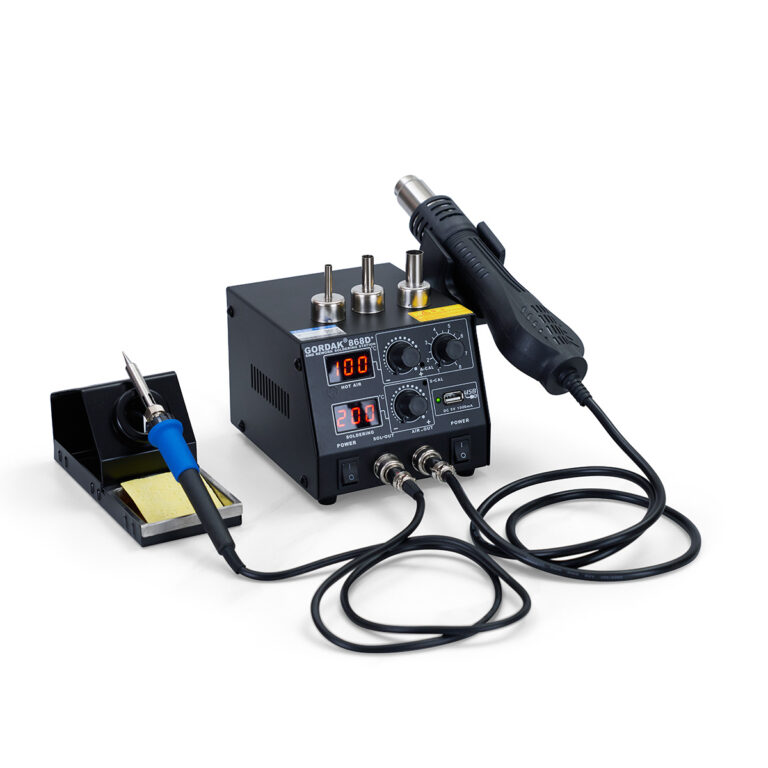
GORDAK provides professional soldering stations and hot air rework systems designed for stable thermal performance, precise temperature control, and long-term industrial reliability.

For OEM/ODM cooperation and distributor inquiries, contact: info@gordakelec.com

请在浏览器中启用JavaScript来完成此表单。