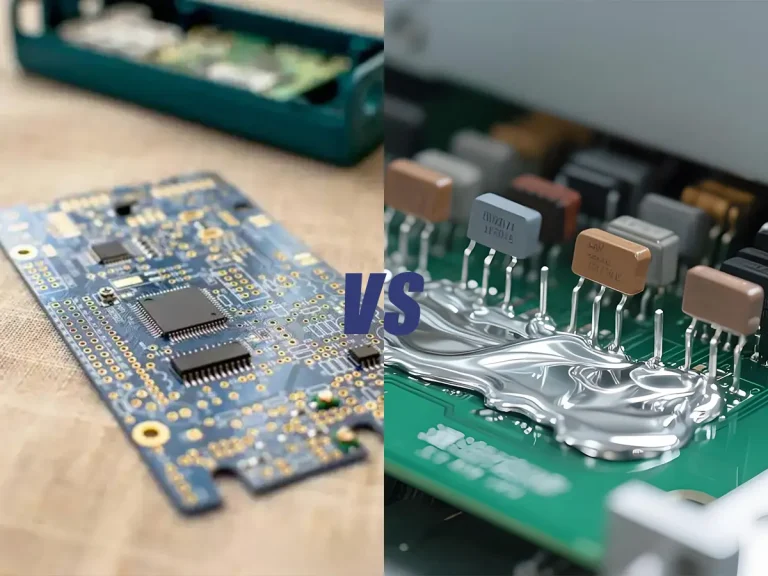
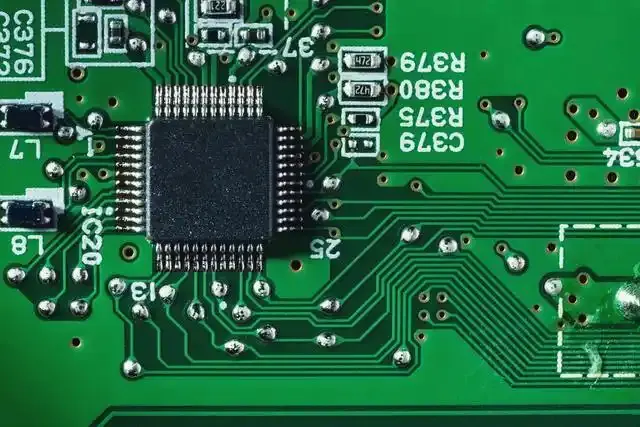
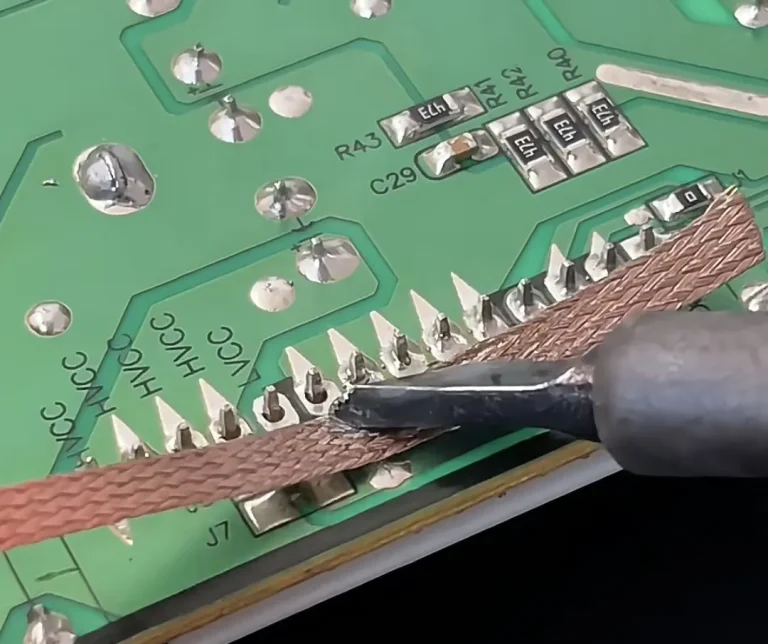
无论您是开始从事电子维修工作,还是升级您的工作空间,二合一热风返修和焊接工作站都是一项明智的投资。这种多功能工具将烙铁和热风返修枪结合在一个装置中,使其成为通孔和表面贴装工作的理想选择。
在这本适合初学者的指南中,我们将解释什么是二合一工作站、它是如何工作的,以及为什么它是电子爱好者、维修店和专业技术人员的完美工具。
Why Choose a Two-in-One Station Instead of Separate Tools?
A two-in-one hot air rework and soldering station is designed for users who need both precision soldering and SMD rework capabilities in one workspace. Compared with purchasing a separate soldering iron and hot air rework station, a combined system provides a more compact and efficient solution for electronics repair, PCB assembly, and component replacement.
For beginners, hobbyists, and small repair workshops, a two-in-one station offers several practical advantages:
Save Workspace and Improve Efficiency
A traditional electronics workstation may require multiple devices for different tasks. A soldering iron is commonly used for through-hole components, wires, and general PCB soldering, while a hot air rework station is needed for removing and replacing SMD components.
A two-in-one station combines both functions into a single unit, reducing bench space requirements and making it easier to switch between soldering and rework operations.
Reduce Equipment Investment
Purchasing separate soldering and hot air equipment can increase the initial investment, especially for users who are building their first electronics repair setup.
A two-in-one solder and hot air station provides both functions in one system, making it a cost-effective option for users who need versatile repair capabilities without purchasing multiple machines.
Suitable for Mixed Soldering Applications
Modern electronic devices contain both through-hole and surface-mount components. A two-in-one station allows technicians to handle different repair tasks, including:
- Through-hole component soldering
- SMD component replacement
- PCB repair
- Connector replacement
- IC rework
This versatility makes it suitable for electronics hobbyists, repair technicians, educational labs, and small production environments.
When Should You Choose Separate Equipment?
Although two-in-one stations are highly versatile, some professional environments may require dedicated equipment.
For example, high-volume production lines or specialized repair centers that perform continuous BGA rework may prefer separate high-performance systems optimized for specific applications.
However, for most electronics repair and development tasks, a reliable two-in-one hot air rework and soldering station provides an excellent balance between functionality, workspace efficiency, and cost.
什么是二合一焊接返修工作站?
二合一工作站集成了
- 烙铁 - 用于将元件精确焊接到 PCB 上。
- 热风枪 - 用于拆焊和返修表面贴装器件 (SMD),包括 BGA 和集成电路。
这种双重功能使您无需使用两台单独的机器,从而简化了您的工作台。
适合初学者的主要功能
Gordak 的二合一工作站在设计时考虑到了用户友好型控制和可靠性。以下是它们成为初学者理想之选的原因:
- 数字温度控制 - 两种工具都易于调整。
- 快速加热元件 - 快速预热,节省时间。
- 人体工程学设计 - 舒适的手柄可减少手部疲劳。
- 清晰显示 - 监控实时温度和设置。
- 自动睡眠模式 - 提高安全性,延长工具寿命。
Key Specifications to Consider When Choosing a Two-in-One Rework Station
Choosing the right two-in-one hot air rework and soldering station requires more than looking at appearance or price. The performance of the equipment directly affects soldering quality, component safety, and work efficiency.
Before purchasing a station, consider the following important specifications.
Temperature Control Accuracy
Stable temperature control is one of the most important factors in a good hot air rework station.
During PCB repair, excessive heat may damage components, lift copper pads, or affect sensitive electronic parts. On the other hand, insufficient heat can result in poor solder flow and incomplete rework.
A professional station should provide:
- Accurate temperature adjustment
- Stable heat output
- Fast temperature recovery after contact with the PCB
Reliable temperature control is especially important when working with SMD components and lead-free solder.
可调节气流控制
Hot air rework requires precise airflow adjustment because different components require different heating conditions.
Too much airflow may:
- Move small SMD components
- Distribute heat unevenly
- Affect nearby components
Too little airflow may:
- Increase heating time
- Prevent proper solder melting
- Reduce rework efficiency
A quality hot air station allows users to adjust airflow according to component size, PCB design, and rework requirements.
Heating Power and Recovery Speed
Heating performance determines how quickly a station can reach the required temperature and maintain stable output during operation.
Higher thermal recovery capability is useful when working with:
- Large copper areas
- Multi-layer PCBs
- Larger components
- Lead-free solder applications
Fast recovery helps reduce unnecessary heating time and improves overall soldering efficiency.
Soldering Iron Performance
The soldering iron part is equally important because many repair tasks still require precise manual soldering.
Important factors include:
- Temperature stability
- Compatible soldering tips
- Heating speed
- Comfortable handle design
A balanced two-in-one station should provide reliable performance for both delicate SMD work and traditional through-hole soldering.
Nozzle Selection and Compatibility
Different SMD packages require different heating areas.
Using the correct hot air nozzle helps concentrate heat on the target component while reducing the risk of affecting surrounding parts.
Common applications include:
- Resistor and capacitor replacement
- IC removal
- Connector rework
- PCB repair
A station with multiple nozzle options provides greater flexibility for different repair tasks.
使用二合一工作站的好处
1.节省空间的设计
将两种工具合二为一可节省宝贵的工作空间,非常适合小型车间或家庭使用。
2.成本效益高
Purchasing one two-in-one station is often more affordable than buying separate units, especially when sourced directly from the factory. Gordak offers factory-direct prices for dealers, making our equipment much cheaper than competing brands.
3.用途广泛
您可以轻松焊接传统元件和返修现代 SMD。无论是修理手机还是制作 DIY 项目,二合一工作站都能胜任。
4.简化维护
由于需要管理的组件减少,维护工作变得更加简单快捷。
Two-in-One Hot Air Rework Station Applications
A two-in-one hot air rework and soldering station is widely used in electronics repair, PCB assembly, and component replacement. By combining a soldering iron and hot air rework gun, it allows technicians to handle both traditional soldering tasks and advanced SMD rework applications.
Different from a standard soldering iron that mainly works with solder joints and through-hole components, hot air rework provides controlled heating for removing and replacing surface-mount components without direct contact.
Common applications include:
PCB Repair and Maintenance
Electronic devices often require component replacement or circuit repair after long-term use. A two-in-one station helps technicians perform tasks such as:
- Replacing damaged PCB components
- Repairing solder joints
- Removing faulty parts
- Installing replacement components
The soldering iron is suitable for wire connections, through-hole components, and general soldering work, while the hot air function provides precise heating for SMD components.
SMD Component Rework
Modern electronic products use a large number of surface-mount devices (SMD), including:
- Resistors
- Capacitors
- Integrated circuits (ICs)
- Connectors
- Microcontrollers
Hot air rework allows technicians to heat solder evenly around an SMD component, making it easier to remove or replace components without applying mechanical force.
This makes a two-in-one station especially useful for:
- Smartphone repair
- Laptop motherboard repair
- Consumer electronics maintenance
- Prototype development
IC and Chip Replacement
Many electronic repair tasks involve replacing damaged integrated circuits or other sensitive components.
With proper temperature and airflow control, a hot air rework station can help technicians:
- Melt solder evenly
- Remove components safely
- Clean solder pads
- Install replacement parts
For advanced packages such as QFP and similar surface-mount components, controlled hot air heating is essential for preventing PCB damage.
Prototype Assembly and Small-Batch Production
Engineers and developers often need flexible equipment during prototype development.
A two-in-one soldering and rework station allows users to quickly switch between:
- Component installation
- PCB modification
- SMD replacement
- Manual repair work
This flexibility makes it suitable for electronics laboratories, repair workshops, and small-scale production environments.
如何使用逐步概述
用于焊接:
- 将熨斗调至 300°C-350°C 的温度。
- Tine the tip with a small amount of solder.
- Heat the joint, apply solder, then remove.
- 让接头冷却,检查质量。
For Hot Air Rework and Desoldering
Hot air desoldering requires proper control of temperature, airflow, and heating time. Unlike a soldering iron that transfers heat through direct contact, a hot air rework station heats solder joints through controlled airflow.
Follow these basic steps for safe and effective SMD rework.
Step 1: Select the Appropriate Nozzle
Choose a nozzle size that matches the component being removed.
A nozzle that is too large may heat surrounding components unnecessarily, while a nozzle that is too small may require longer heating time.
The correct nozzle helps concentrate heat on the target area.
Step 2: Apply Flux to the Solder Joint
Applying flux improves solder wetting and helps reduce oxidation during heating.
Flux can help:
- Improve heat transfer
- Reduce solder surface tension
- Make component removal easier
Step 3: Set Temperature and Airflow
The correct settings depend on:
- Solder type
- Component size
- PCB thickness
- Airflow requirements
Avoid using excessive temperature to speed up the process, as overheating may damage the PCB or nearby components.
Step 4: Heat the Component Evenly
Move the hot air nozzle slowly around the component area instead of focusing heat on one point for too long.
Even heating helps:
- Melt solder uniformly
- Reduce thermal stress
- Prevent PCB damage
Step 5: Remove the Component Carefully
Once the solder has fully melted, gently lift the component using tweezers.
Do not force the component while solder is still solid, as this may:
- Lift PCB pads
- Damage component leads
- Scratch the board surface
Step 6: Clean and Prepare the PCB
After removing the component:
- Remove excess solder
- Clean flux residue
- Inspect PCB pads
The board is then ready for component replacement or further repair.
用于返工:
- Apply flux to the component.
- Use the hot air gun at 280°C–350°C.
- Gently lift the component with tweezers.
- Reflow or replace the part as needed.
有关详细用法,请参阅我们的文章: [如何像专业人员一样使用二合一焊接和返修工作台].
How to Choose the Right Two-in-One Hot Air Rework Station
Selecting the best hot air rework station depends on your working requirements, repair applications, and expected workload. A suitable two-in-one station should provide stable performance for both soldering and rework operations.
Consider the following factors before making a decision.
Consider Your Main Applications
Different users have different requirements.
For beginners and hobbyists, important features include:
- Easy temperature adjustment
- Simple operation
- Reliable safety functions
For repair technicians, a station should provide:
- Stable temperature control
- 可调节气流
- Fast heating recovery
For professional workshops, durability and long-term performance become more important.
Check Temperature Range and Stability
Temperature range alone does not determine performance. Stability and accuracy are equally important.
A good station should maintain consistent heat output during continuous operation, especially when working with:
- SMD components
- Lead-free solder
- Multi-layer PCBs
Stable temperature control helps improve solder quality and reduces the risk of overheating.
Evaluate Airflow Control
Airflow adjustment is essential for hot air rework.
Different components require different airflow settings. Small SMD components may need gentle airflow, while larger components may require stronger heating capability.
Precise airflow control improves:
- Component protection
- Heating accuracy
- Rework efficiency
Consider Long-Term Reliability
For users who depend on their equipment regularly, reliability is an important factor.
Consider:
- Heating element lifespan
- Replacement parts availability
- Tip and nozzle compatibility
- Manufacturer support
A reliable two-in-one station provides consistent performance throughout long-term use.
Choose GORDAK
Gordak 针对不同的经验水平和使用情况提供了一系列机型。对于初学者,我们推荐以下机型
- 易于阅读的 LCD 显示屏
- 稳定的温度性能
- 内置安全功能
您可以联系我们,我们会根据您的需求向您推荐。
为什么选择 Gordak?
- 20 多年的焊接工具专业知识
- 高产品可靠性和性能
- 经销商出厂价--更实惠
- 全球分销和技术支持
最终想法
对于希望获得可靠、高效和经济实惠工具的初学者来说,二合一焊接和返修工作站是一个极佳的选择。无论您是要制作自己的第一块电路板,还是要开展电子维修业务,Gordak 都能为您提供合适的解决方案。
对批发或经销商价格感兴趣?现在就联系我们 info@gordakelec.com.
FAQs
Yes. A two-in-one soldering and rework station is suitable for beginners because it combines two essential electronics repair tools into one system. Users can learn traditional soldering and SMD rework without purchasing multiple machines.
Yes. Hot air rework stations are commonly used to remove and replace SMD components such as resistors, capacitors, ICs, and connectors. Proper temperature and airflow control are important to avoid PCB damage.
The suitable temperature depends on solder type, component size, and PCB structure. Many SMD rework applications use approximately 280°C–350°C, but actual settings should be adjusted according to the specific application.
A hot air station and soldering iron serve different purposes. A soldering iron is ideal for direct soldering tasks, while hot air is better for SMD component removal and reflow. A two-in-one station combines both functions for greater flexibility.
Yes. Two-in-one soldering and rework stations are commonly used for PCB repair, component replacement, prototype assembly, and electronics maintenance.