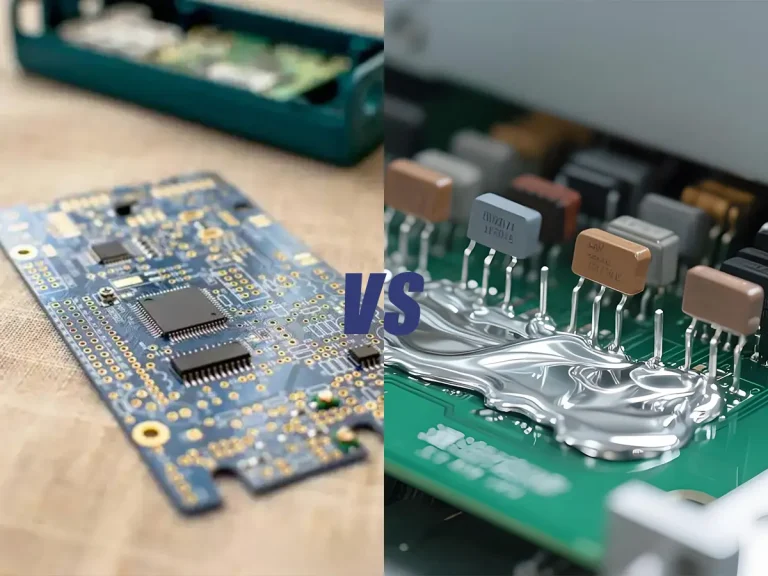
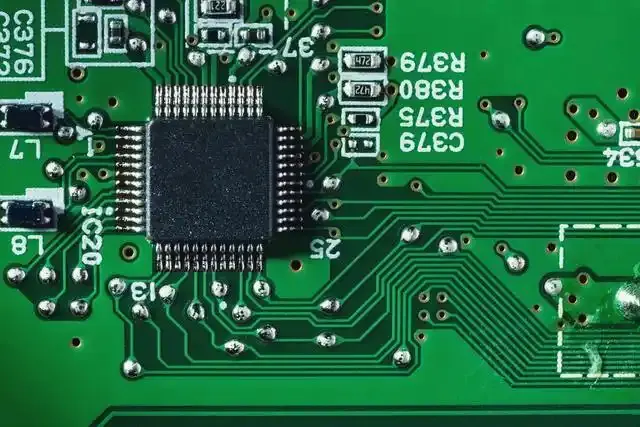
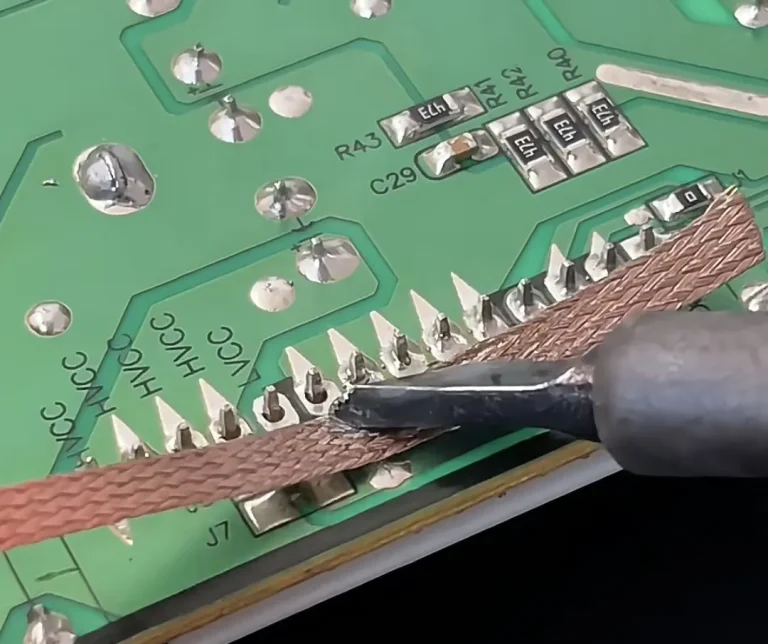
A hot air rework station is an essential tool for SMD desoldering and PCB repair. It uses controlled hot airflow to melt solder joints without direct contact, making it ideal for removing or replacing surface-mounted components.
When used incorrectly, it can easily damage pads, overheat components, or fail to reflow solder properly.
This guide explains how it works, when to use it, and the correct techniques used in real electronics repair environments.
What Is a Hot Air Rework Station?
A hot air rework station is a precision electronic repair tool designed to apply controlled hot air to a specific area on a PCB.
Unlike a soldering iron, which heats a single point, a hot air station heats an entire component or solder area evenly.
Main purpose:
- Remove SMD components
- Reflow solder joints
- Repair PCB solder defects
- Assist in advanced electronic rework
It is widely used in:
- PCB manufacturing
- Mobile phone repair
- Industrial electronics maintenance
- R&D laboratories
What It Is NOT
A hot air rework station is often misunderstood as a general-purpose heating tool.
It is not:
- A heat gun for industrial plastics
- A replacement for soldering iron
- A tool for uncontrolled heating
It is a precision instrument designed specifically for electronics rework.
How a Hot Air Rework Station Works
A hot air rework station operates by combining two controlled systems:
- Heating element (creates hot air)
- Airflow system (delivers controlled heat direction)
The user controls:
- Temperature
- Air volume (airflow)
- Nozzle direction
Heat transfer principle
Solder melts when it reaches its reflow temperature. Hot air evenly heats the component and surrounding solder joints until the solder enters a liquid state.
At this point:
- Components can be safely removed
- Solder joints can be reformed
- Defective joints can be corrected
Why airflow control matters
Airflow determines how heat is distributed:
- Low airflow → precision heating for small ICs
- Medium airflow → general SMD components
- High airflow → larger components or shielding removal
Incorrect airflow is one of the most common reasons components move or get damaged during rework.
PCB thermal behavior
PCB boards absorb heat due to copper planes and multilayer structures.
This creates what technicians call thermal mass effect, where:
- Larger copper areas require more heat
- Heat spreads unevenly without proper control
- Some joints melt slower than others
This is why experienced technicians use gradual heating instead of direct high-temperature blasting.
When to Use a Hot Air Rework Station
A hot air rework station is used whenever solder joints must be heated evenly across multiple connection points.
SMD component removal
Common applications include:
- Resistors
- Capacitors
- Diodes
- Small IC packages (SOIC, QFP, QFN)
Hot air allows all pins to reach melting temperature simultaneously.
PCB repair and correction
Hot air is widely used for:
- Removing solder bridges
- Fixing misaligned components
- Reworking defective solder joints
- Repairing lifted or damaged pads
Advanced applications
In professional environments, hot air is also used for:
- Preheating before BGA rework
- Localized reflow correction
- Re-seating partially soldered components
Non-electronic uses
Although designed for electronics, it can also be used for:
- Heat shrink tubing
- Softening adhesives
- Component salvage work
Hot Air Rework Station vs Soldering Iron
These two tools serve completely different purposes in electronics repair.
Soldering iron
- Direct point heating
- Best for single joints
- High precision manual soldering
- Ideal for wire and through-hole work
Hot air rework station
- Area heating tool
- Heats multiple solder joints at once
- Required for SMD and IC rework
- Better for removal and reflow processes
When to use each tool
- Small solder joint → soldering iron
- SMD IC removal → hot air station
- Complex repair → combination of both tools
In professional repair workflows, both tools are often used together.
How to Use a Hot Air Rework Station (Step-by-Step Workflow)
Proper technique is critical. Incorrect usage can easily damage PCB pads or components.
Step 1 – Set temperature
Temperature depends on solder type:
- Leaded solder: ~280°C – 320°C
- Lead-free solder: ~320°C – 380°C
Higher temperature is not always better. Excess heat increases the risk of PCB damage.
Step 2 – Adjust airflow
Airflow determines control precision:
- Low airflow → fine components, IC chips
- Medium airflow → general SMD work
- High airflow → large components
Too much airflow can physically displace small components.
Step 3 – Apply flux
Flux is essential for proper solder reflow.
It helps:
- Remove oxidation
- Improve heat transfer
- Ensure smooth solder melting
Without flux, solder may not reflow evenly even at high temperature.
Step 4 – Heat the component evenly
Move the nozzle in a slow circular motion.
Keep distance consistent (usually 2–5 cm depending on nozzle size).
Avoid focusing heat on a single point.
Step 5 – Remove component
Once solder reaches full liquid state:
- Use tweezers or vacuum pickup tool
- Lift gently without force
If resistance is felt, continue heating instead of forcing removal.
Step 6 – Controlled cooling
Allow PCB to cool naturally.
Rapid cooling can create mechanical stress in solder joints and PCB layers.
Common Mistakes When Using a Hot Air Rework Station
Most PCB damage during rework does not come from the tool itself, but from incorrect operating habits.
Using excessive temperature
One of the most common mistakes is assuming higher temperature equals faster work.
In reality, excessive heat causes:
- PCB pad lifting
- Component internal damage
- Delamination of board layers
- Flux burnout before solder reflow
Stable soldering is about controlled heat, not maximum heat.
Too much airflow
High airflow can easily become a problem in precision work.
It may:
- Displace small components before solder melts
- Cool the surface unevenly
- Reduce effective heat transfer
Small ICs require low, controlled airflow rather than aggressive air output.
Ignoring flux application
Without flux:
- Oxidation blocks solder reflow
- Heat becomes less effective
- Components require higher temperature to move
In professional rework, flux is not optional. It is a core part of the process.
Holding heat in one spot
Concentrated heating on a single point leads to:
- Local PCB overheating
- Uneven solder melting
- Risk of pad separation
Heat should always be distributed in motion.
Wrong nozzle selection
Nozzle size directly affects heat control.
A too-small nozzle reduces efficiency, while a too-large nozzle reduces precision and increases risk of collateral heating.
Why Solder Sometimes Does Not Melt During Rework
A common frustration among beginners is:
“Why doesn’t solder melt even at high temperature?”
This issue usually has nothing to do with tool power.
Thermal mass effect
Large copper planes inside PCBs absorb and distribute heat.
This means:
- Heat spreads away from target area
- More energy is required for reflow
- Small components may melt faster than connected pads
This is especially common in multilayer industrial PCBs.
Incorrect temperature settings
Lead-free solder requires higher thermal energy than leaded solder.
If temperature is too low:
- Solder softens but does not fully melt
- Component remains stuck
- Rework becomes inefficient
Oxidation barrier
Oxidized solder surfaces resist heat transfer.
Without flux:
- Heat cannot penetrate surface effectively
- Solder remains solid even under high temperature
Poor airflow distribution
Even if temperature is correct, improper airflow direction can prevent heat from reaching the solder joint evenly.
Hot Air Rework Station Models Overview (GORDAK Series)
Different applications require different levels of control, stability, and precision.
Gordak 857 – Entry-level rework station
A practical solution for basic SMD repair tasks.
- Suitable for general electronics repair
- Simple temperature and airflow control
- Ideal for beginners and maintenance use
Common use cases:
- Small component removal
- Basic PCB repair
- Hobby and light repair work
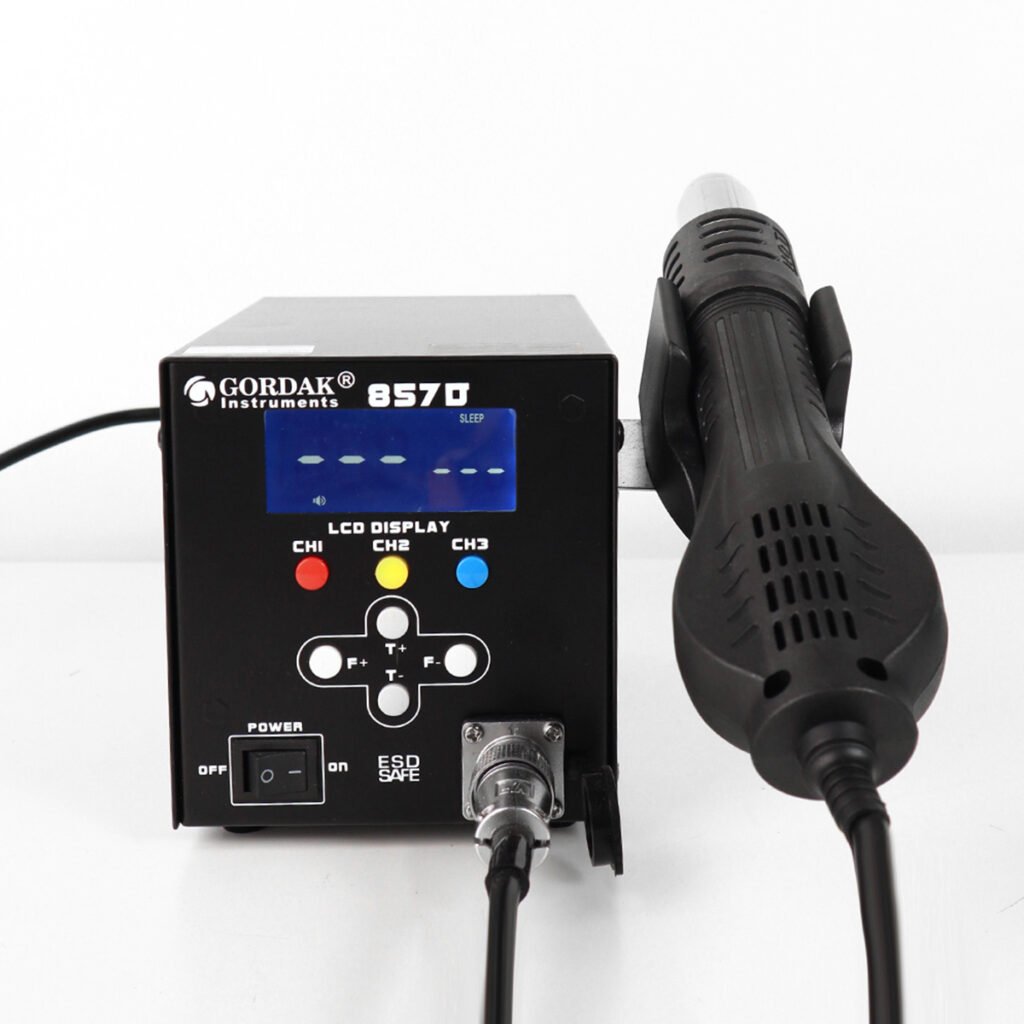
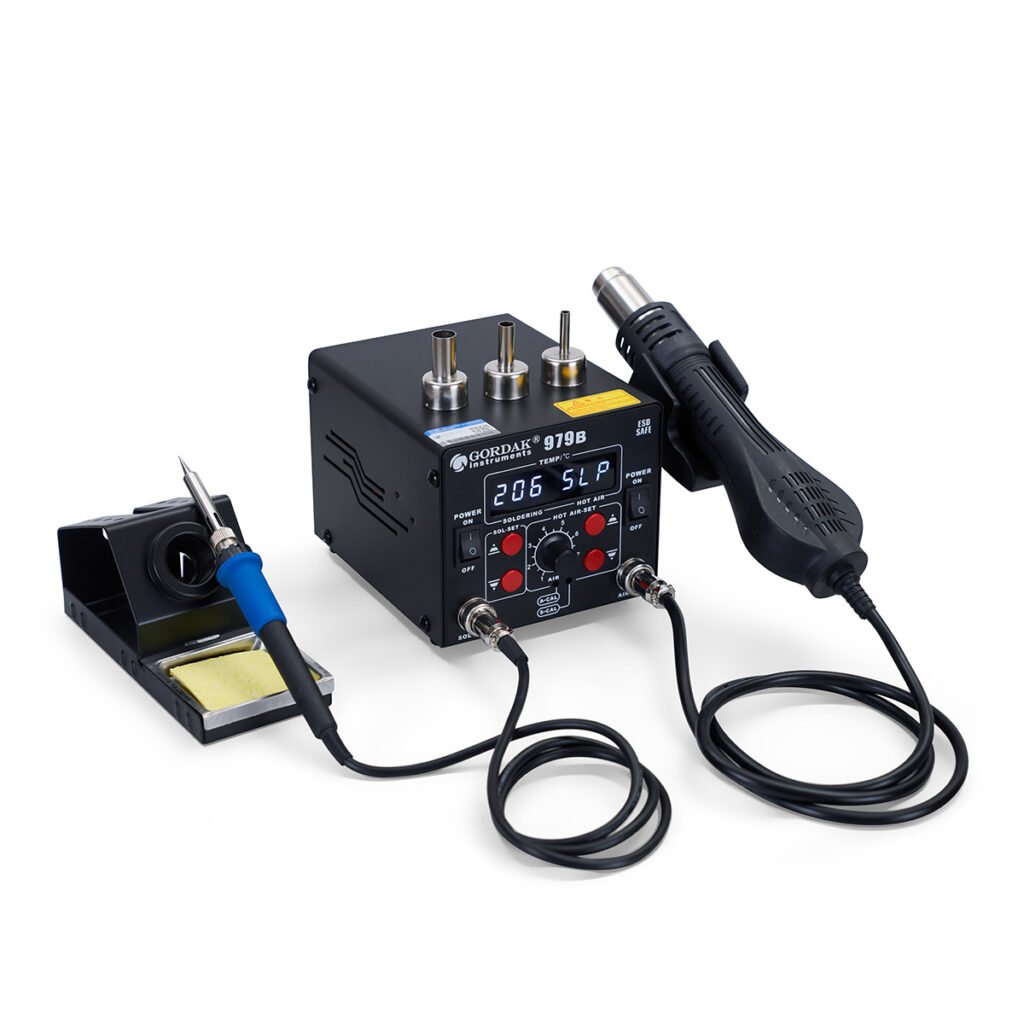
Gordak 979B – Dual-function soldering + hot air station
Designed for users who need both soldering and rework capability.
- Integrated soldering iron and hot air system
- Balanced performance for repair environments
- Efficient for mixed repair tasks
Common use cases:
- Repair workshops
- Mobile device repair
- Small production maintenance
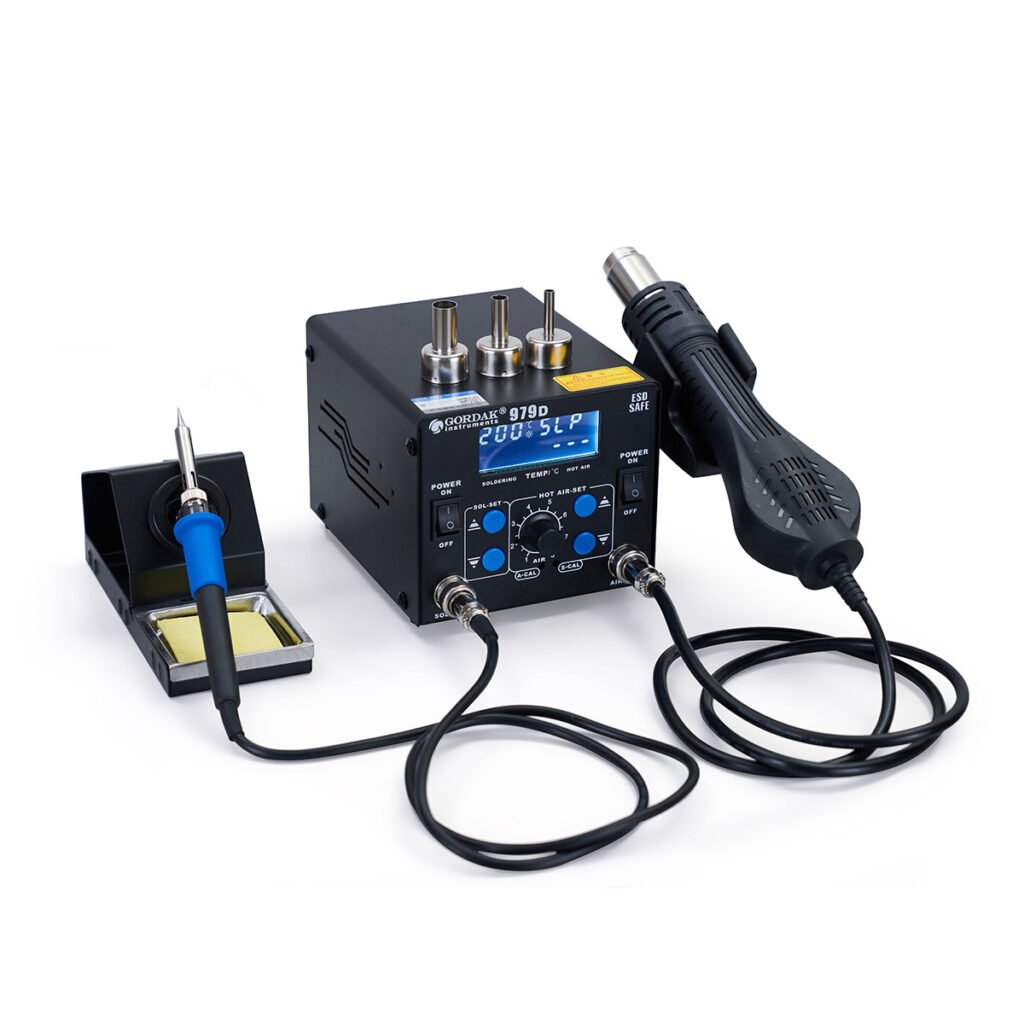
Gordak 979D – Advanced digital control station
A more precise system designed for stable thermal control.
- Digital temperature stabilization
- Better airflow precision
- Improved consistency for delicate SMD work
Common use cases:
- Professional PCB rework
- IC replacement
- Precision electronics repair
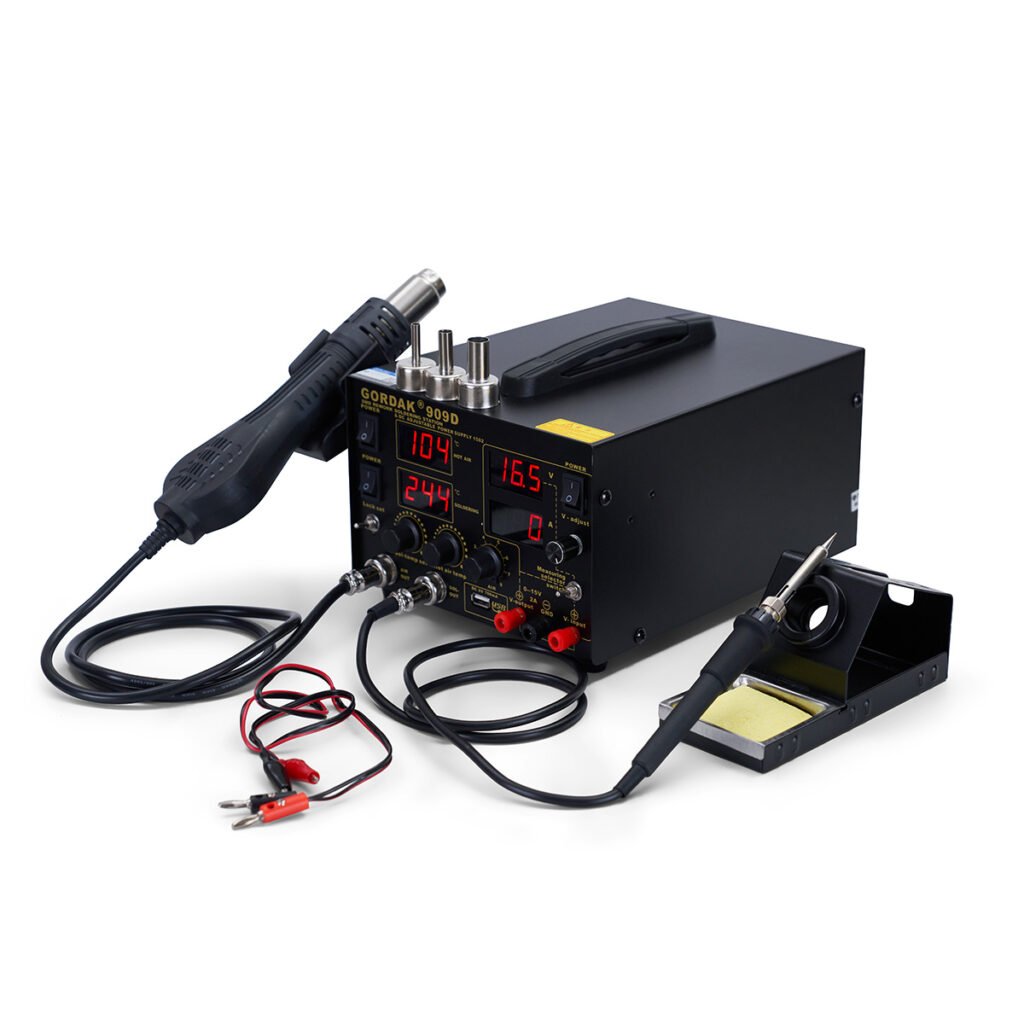
Gordak 909D – 3-in-1 professional system
An all-in-one workstation combining:
- Hot air rework station
- Soldering station
- DC power supply
Designed for advanced electronics environments requiring multiple tools in one system.
Common use cases:
- Industrial repair stations
- R&D laboratories
- Professional production maintenance
Troubleshooting Common Hot Air Rework Issues
No airflow output
Possible causes:
- Air pump blockage
- Internal hose obstruction
- Filter clogging
Temperature instability
Possible causes:
- Sensor malfunction
- Heating element aging
- Poor calibration
Weak heating performance
Possible causes:
- Heating coil degradation
- Power supply inconsistency
- Long-term wear of internal components
Uneven reflow results
Possible causes:
- Incorrect nozzle size
- Poor airflow direction
- Lack of flux application
Who Uses Hot Air Rework Stations
Hot air rework stations are widely used across multiple industries:
- Electronics repair technicians
- PCB assembly engineers
- Mobile phone repair shops
- Industrial maintenance teams
- Electronics R&D laboratories
They are essential tools wherever SMD components are used.
Frequently Asked Questions
Can a hot air rework station damage a PCB?
Yes, if temperature or airflow is not controlled properly. Excess heat can lift pads or damage board layers.
What temperature should I use for SMD removal?
Typically 280°C to 380°C depending on solder type and board thermal mass.
Why do components move during hot air heating?
Usually caused by excessive airflow or uneven solder melting.
Do I need flux for hot air rework?
Yes. Flux is essential for proper solder reflow and oxidation removal.
Can hot air replace a soldering iron?
No. Hot air is used for area heating, while soldering irons are used for precise point soldering.
What is the biggest mistake beginners make?
Using too much heat and airflow while ignoring flux application.
Conclusion
A hot air rework station is a core tool in modern electronics repair and SMT maintenance.
It enables precise removal and reinstallation of SMD components, but requires proper control of temperature, airflow, and flux usage.
Most failures in PCB rework are not caused by the tool itself, but by incorrect technique.
With proper handling, a hot air rework station significantly improves repair efficiency, reduces PCB damage risk, and ensures stable solder joint quality.
Upgrade your PCB repair efficiency with GORDAK info@gordakelec.com professional hot air rework stations—built for stable temperature control, precise airflow, and reliable performance in industrial electronics applications.