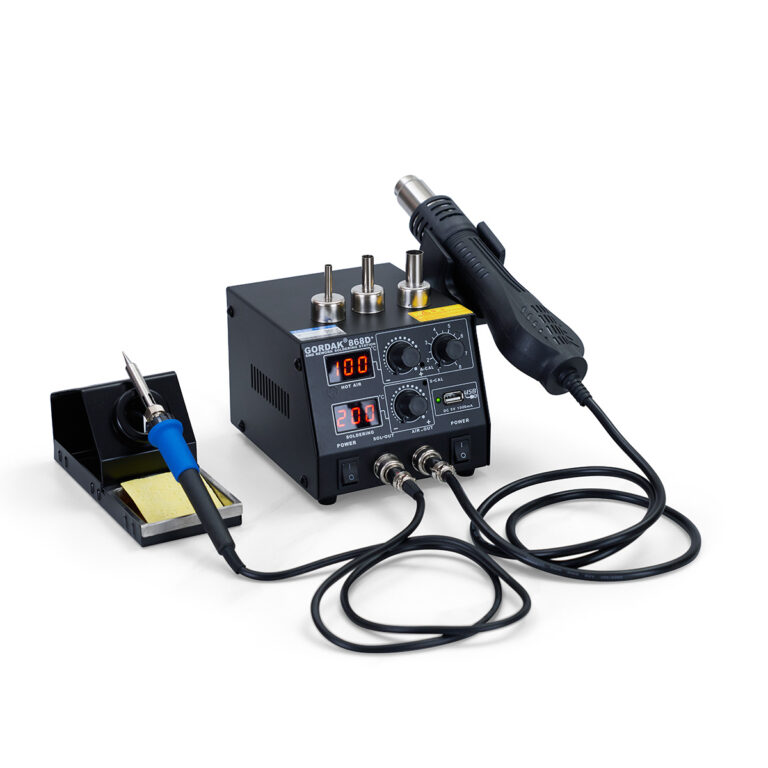
Hot air rework stations are essential tools for surface-mount device (SMD) soldering, desoldering, and rework tasks. To keep your equipment performing at its best and avoid costly breakdowns, regular maintenance is critical.
This guide from Gordak, a trusted manufacturer of soldering and rework tools, outlines the best practices for maintaining your hot air rework station for long-term reliability and performance.
1. Daily Maintenance Tasks
Perform these quick checks and clean-ups before and after each use:
- Clean the nozzle: Remove solder residue and debris from the nozzle using a soft brush or alcohol wipes.
- Check airflow: Make sure the airflow is smooth and unobstructed. Avoid using the station in dusty or poorly ventilated environments.
- Inspect the power cord and connectors: Look for visible wear or damage and ensure all connections are secure.
- Allow proper cooldown: Let the station cool down naturally before shutting off the power to protect internal components.
2. Weekly Maintenance Routine
Once a week, perform a more thorough inspection:
- Remove and clean nozzles thoroughly: Soak them in isopropyl alcohol if needed and ensure there’s no carbon buildup.
- Inspect the heating element area: Look for signs of overheating, discoloration, or wear.
- Check for air leaks: Listen for unusual hissing sounds that may indicate a damaged hose or seal.
3. Monthly Preventive Maintenance
A deeper inspection each month helps detect issues early:
- Open and inspect filters (if applicable): Some models include air filters that need periodic cleaning or replacement.
- Calibrate the temperature: Use a thermometer or thermal sensor to verify temperature accuracy.
- Test the thermocouple and sensors: Faulty sensors can lead to inconsistent heating or overheating.
- Tighten screws and hardware: Ensure all casing, control knobs, and hose connections are secure.
4. Recommended Maintenance Supplies
Keep the following on hand to simplify your maintenance routine:
- Isopropyl alcohol (IPA) for cleaning
- Lint-free wipes or brushes
- Replacement nozzles and filters
- Digital thermometer for calibration
- Anti-static mat and wrist strap for safe servicing
5. Common Hot Air Rework Station Problems and Solutions
Even with proper maintenance, hot air rework stations may occasionally experience performance issues due to component wear, contamination, or incorrect operation.
Understanding common problems helps users quickly identify the cause and restore normal performance.
Hot Air Rework Station Does Not Heat Up
If the hot air station turns on but does not produce sufficient heat, possible causes include:
- Damaged heating element
- Faulty temperature sensor
- Loose internal connection
- Incorrect temperature setting
Before replacing parts, check that the temperature is set correctly and allow sufficient warm-up time.
If the problem continues, the heating element or temperature control system may require inspection.
Weak or Unstable Airflow
Insufficient airflow is another common issue during SMD rework.
Possible causes include:
- Blocked nozzle
- Dust buildup inside the airflow path
- Aging air pump
- Damaged internal hose
Cleaning the nozzle regularly and keeping the airflow system free from debris can help maintain stable performance.
Temperature Fluctuation During Operation
Stable temperature control is essential for reliable solder reflow.
Temperature instability may result from:
- Sensor aging
- Poor calibration
- Heating element degradation
- Excessive airflow settings
Regular temperature verification helps ensure accurate heating and prevents unnecessary stress on PCB components.
Components Move During Hot Air Rework
If small components shift during heating, the problem is usually related to airflow or technique.
Common causes include:
- Airflow set too high
- Incorrect nozzle size
- Heating too quickly
Using suitable airflow settings and gradually heating the PCB helps improve control during SMD rework.
6. When to Replace Parts
Even high-quality equipment like Gordak’s hot air stations will eventually require replacement parts. Look for these signs:
- Heating element failure: If the station no longer produces heat or heats unevenly, the element may need replacing.
- Fan or pump issues: If airflow is weak or noisy, internal fans or pumps may be worn out.
- Display or control malfunction: Flickering, incorrect readings, or unresponsive buttons indicate electrical component wear.
Always use genuine Gordak parts to ensure compatibility and maintain safety standards.
7. Signs Your Hot Air Rework Station Needs Maintenance or Repair
Regular inspection helps identify problems before they affect repair quality.
The following signs indicate that your hot air rework station may require maintenance or service:
Longer Heating Time
If the station takes significantly longer than usual to reach the target temperature, the heating element may be aging or airflow efficiency may be reduced.
Inconsistent Heating Performance
Uneven heating can cause:
- Incomplete solder melting
- Poor reflow results
- Increased risk of PCB damage
Check the nozzle condition, temperature accuracy, and heating system performance.
Unusual Noise From the Air Pump
Abnormal sounds may indicate:
- Dust accumulation
- Mechanical wear
- Internal airflow problems
Ignoring these symptoms may eventually lead to airflow failure.
Incorrect Temperature Display
If the displayed temperature does not match actual heat output, calibration may be required.
Using an inaccurate temperature reading can increase the risk of overheating sensitive electronic components.
8. Storage and Handling Tips
Proper handling and storage help avoid unnecessary wear:
- Store the unit in a dry, dust-free space
- Coil hoses neatly to prevent kinks or cracks
- Avoid dropping or knocking the station during transport
- Do not place heavy objects on the station
9. How Often Should You Maintain a Hot Air Rework Station?
The required maintenance frequency depends on how often the equipment is used and the working environment.
| Usage Environment | Recommended Maintenance |
|---|---|
| Hobby and occasional repair | Clean nozzle after use and inspect monthly |
| Electronics repair shops | Check airflow and clean components weekly |
| Production environments | Perform daily inspection and scheduled preventive maintenance |
For high-frequency applications, regular maintenance is especially important because dust, flux residue, and continuous heating cycles can gradually affect performance.
A simple maintenance routine can significantly extend the service life of a hot air rework station.
10. Features of a Reliable Hot Air Rework Station
A well-designed hot air rework station not only improves repair efficiency but also reduces maintenance requirements.
When selecting a hot air station for electronics repair, consider the following features:
Stable Temperature Control
Accurate temperature control is essential for SMD rework.
A reliable system should provide:
- Fast heating response
- Stable temperature output
- Reduced temperature fluctuation
This helps protect sensitive components and ensures consistent solder reflow.
Adjustable Airflow Control
Different components require different airflow levels.
A quality hot air rework station should allow precise airflow adjustment for:
- Small SMD components
- IC packages
- Larger thermal mass components
Proper airflow control improves accuracy and reduces the risk of component displacement.
Easy Maintenance Design
Professional equipment should allow convenient maintenance through:
- Replaceable nozzles
- Accessible spare parts
- Simple cleaning procedures
This reduces downtime and extends equipment lifespan.
Reliable Heating System
A durable heating element provides consistent performance during repeated repair operations.
This is especially important for:
- Repair workshops
- Production maintenance
- Electronics laboratories
Why Regular Maintenance Matters
Neglecting your rework station can lead to:
- Irregular soldering results
- Increased component damage risk
- Shortened equipment lifespan
- Costly repairs or replacements
Regular maintenance ensures your rework station remains a reliable tool in your workshop or production line.
Trust Gordak for Long-Term Performance
At Gordak, we’re committed to providing durable, high-performance hot air rework stations trusted by professionals worldwide. Regular maintenance—combined with our reliable after-sales service—helps ensure every unit performs at its best for years to come.
Need help with parts, service, or technical support?
Contact us at info@gordakelec.com
Hot Air Rework Stations
What Is a Hot Air Rework Station and How Does It Work?
Applications of a Hot Air Rework Station: What Can Be Soldered?
Hot Air Soldering for BGA and SMD Repair
Hot Air Rework Station vs. Infrared Rework Station: Pros and Cons
Analog vs. Digital Hot Air Rework Stations: What’s the Difference?
Using a Hot Air Rework Station for Mobile Phone Repairs
Can You Use a Hot Air Rework Station for Heat Shrink Tubing?
Hot Air Reflow Soldering: What It Is and How It Works
Hot Air Rework Station Maintenance Guide
Troubleshooting Common Hot Air Soldering Issues
Tips to Prevent PCB Damage While Using a Hot Air Rework Station
Beginner’s Guide to Using a Hot Air Rework Station Safely
How to Desolder SMD Components Using a Hot Air Rework Station