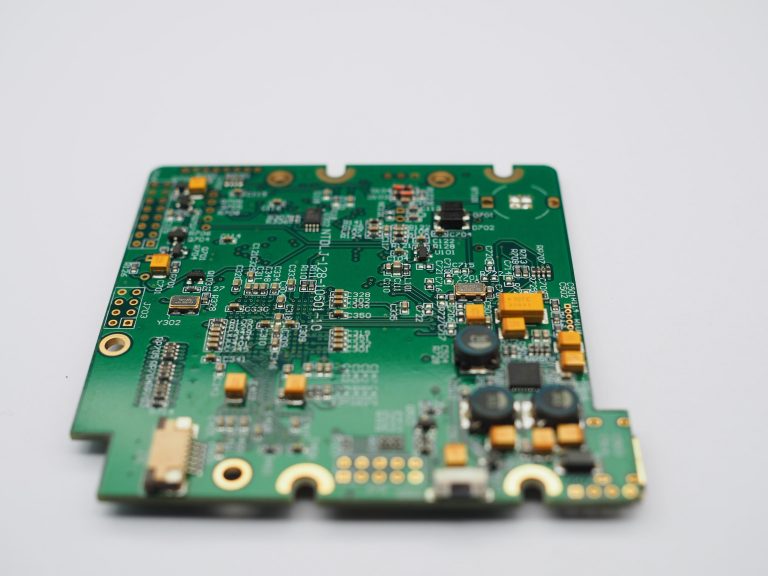
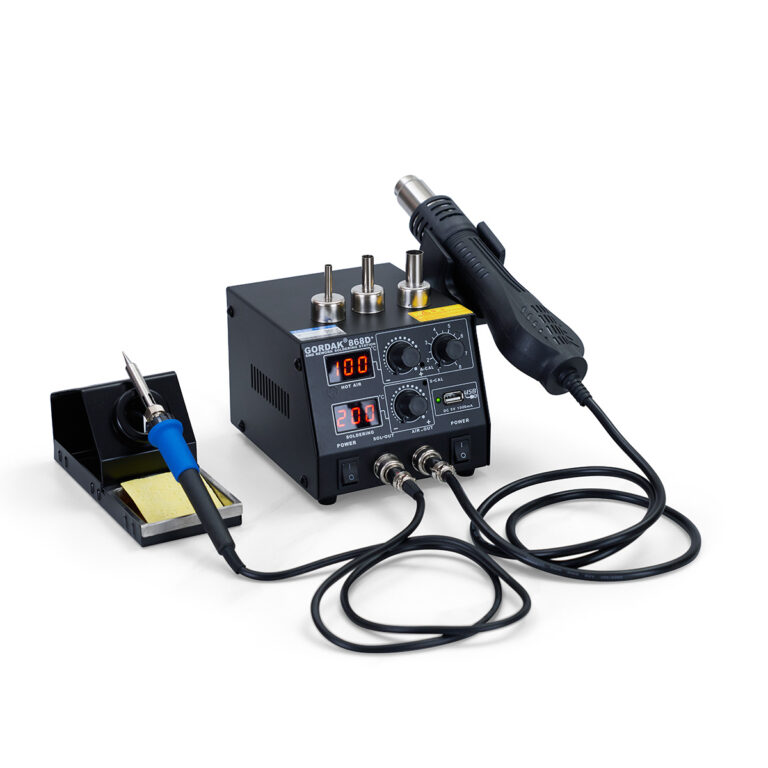
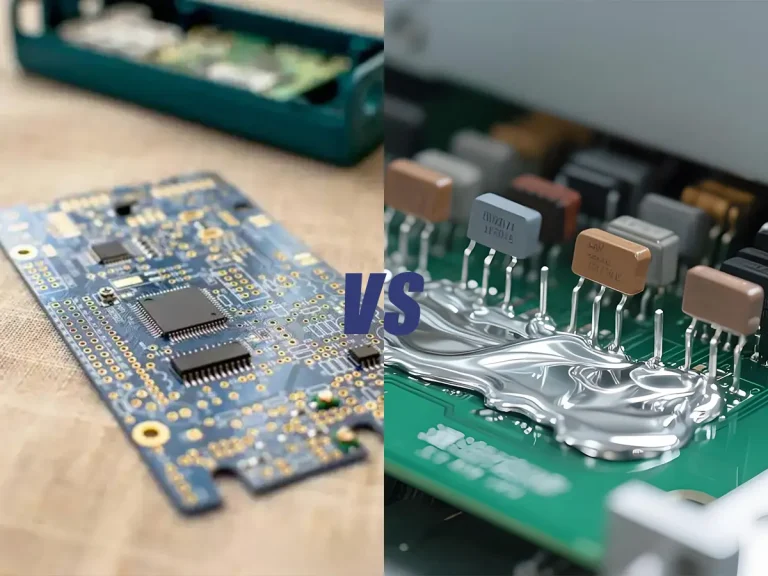
When working on a circuit board you have to either choose a desoldering option or a soldering rework station. Although both are similar functions, they both have an advantage and disadvantages while you should choose one over another. Below is the comparison between them, so find out which is best used for your circuit board using the guides listed below
What is Soldering and Rework Station and What are They Used for, You May Ask?
A soldering rework station is used when working on a printed circuit board, mostly when you want to repair a circuit board you will need to remove the former solder while repairing and fix the portion with a new one.
These stations send hot air to warm the circuit board for easy removal and resoldering, it doesn’t require multiple devices before it can function. They also come in different sizes which are made suitable for different printed circuit boards, some of the new models have additional features such as a camera, nitrogen capable components, and cabinets boards.
Some other uses of soldering rework station include securing loose connections on the board, repairing damaged components, it’s also useful in the reworking of surface-mounted components.
How to Use of Soldering Rework Station
To make use of this station, you firstly turn on the hot air work station and choose the correct nozzle size for the job. Then, you will regulate the temperature and airflow rate to melts the type of solder on the board, you properly move the end of the gun on the board to ensure no damage is caused. Always use vacuum components to remove the melted part from the circuit board.
Soldering and rework station is the best option when it comes to full-featured repairs and reworking on external circuit components.
What Is a Desoldering Station and What Is It Used For?
Desoldering stations are more portable than soldering rework stations; these stations will effectively resolder components that are needed to be repaired due to their compactness. Most of this station comprises an in-built vacuum that removes melted solder as you work which makes the board circuit clean.
How to Use Desolder
To use a desolder, you will first turn on the device then you will set the temperature to the required degree needed to melt the solder on the circuit board. While repairing ensure you place the solder at the end of the desoldering gun to ensure a heat bridge is create to melts the solder you want to remove. Lastly activate the vacuum suction to remove the melted solder on the component.
The characteristics feature of desoldering is due to its compactness, it could be carried anywhere to remove or rework a component compare to the soldering rework stations.
Soldering Station vs. Desoldering Station vs. Rework Station
Although soldering, desoldering, and rework stations are all used for electronics repair, they are designed for different tasks.
A soldering station is primarily used to create or repair solder joints. A desoldering station is designed to remove molten solder, usually with a heated tip and vacuum system. A rework station is designed for more complex repair tasks, particularly when components need to be removed, replaced, or reworked.
| Feature | Soldering Station | Desoldering Station | Rework Station |
|---|---|---|---|
| Primary purpose | Joining components | Removing solder | Removing and replacing components |
| Main heat source | Soldering iron tip | Heated desoldering tip | Hot air or other rework heating systems |
| Solder removal | Limited | Excellent | Excellent for many SMD applications |
| SMD component rework | Limited | Limited | Excellent |
| Through-hole soldering | Excellent | Useful for removal | Not the primary application |
| Multi-pin SMD removal | Difficult | Not ideal | Excellent |
| Vacuum function | Usually no | Usually integrated | Depends on the model |
| Best suited for | Soldering wires and components | Removing solder from joints | PCB and SMD repair |
| Typical users | Hobbyists, technicians, assemblers | Repair technicians | Electronics repair professionals and engineers |
The right choice depends on the type of work you perform. A soldering station is the better option when your primary task is creating precise solder joints. A desoldering station is more convenient when you frequently remove solder from through-hole connections. A rework station is generally more suitable when you need to remove or replace SMD components or perform more complex PCB repairs.
Which Station Should You Choose?
The best station depends on the type of electronics work you perform rather than simply the number of features or the maximum temperature.
Choose a Soldering Station If:
A soldering station is usually the best choice when you mainly need to:
- Solder wires
- Work with through-hole components
- Create individual solder joints
- Repair connectors
- Perform precision point soldering
A temperature-controlled soldering station provides more precise control for these applications.
Choose a Desoldering Station If:
A desoldering station is useful when your main task is removing solder from existing connections.
It can be particularly convenient for:
- Through-hole component removal
- Removing solder from component leads
- PCB repair
- Repeated desoldering work
- Repair environments where vacuum solder removal is frequently required
The integrated vacuum system can make solder removal faster and cleaner than using a separate soldering iron and manual desoldering pump.
Choose a Rework Station If:
A rework station is generally more suitable when you work with surface-mount components or need to perform more complex PCB repairs.
Consider a rework station when you regularly need to:
- Remove SMD components
- Replace ICs
- Reflow solder joints
- Repair PCB solder defects
- Work with multi-pin SMD packages
- Perform localized PCB rework
For technicians who perform both soldering and rework, a combination soldering and rework station can provide both functions in one workstation.
Can a Rework Station Replace a Soldering Station?
A rework station cannot completely replace a dedicated soldering station in every application.
A hot air rework station is designed to heat a wider area without direct contact, making it particularly useful for SMD component removal and reflow. A soldering iron, in contrast, provides direct and highly localized heat, which is better for individual solder joints, wires, and through-hole components.
For example, replacing a multi-pin SMD component may be easier with hot air, while attaching a wire to a PCB pad is generally more precise with a soldering iron.
For this reason, professional electronics repair work often uses both tools. A combination soldering and rework station can also be an option when workspace, equipment cost, or portability are important considerations.
Which Station Is Best for Different PCB Tasks?
Different PCB repair tasks call for different tools. The following examples can help you choose the most suitable station.
Soldering Wires
Use a soldering station when attaching wires to PCB pads, connectors, or terminals. The direct heat from the soldering iron provides precise control over the individual connection.
Removing Through-Hole Components
A desoldering station is often convenient when removing through-hole components because its heated tip can melt the solder while the integrated vacuum removes it from the joint.
Removing SMD Components
A hot air rework station is generally more suitable for removing SMD components with multiple solder joints. Hot air heats the joints simultaneously, reducing the need to contact each connection individually.
Replacing an SMD IC
For multi-pin ICs, a rework station can heat the solder around the component until the IC can be lifted without forcing it from the board.
Repairing a Single Solder Joint
A soldering station is usually the simplest option when only one solder joint needs to be repaired.
Complex PCB Repair
When a repair involves removing an SMD component, cleaning the pads, installing a replacement, and making additional solder connections, technicians may use both a rework station and a soldering station.
Key Differences Between Soldering, Desoldering, and Rework Equipment
The simplest way to understand the difference is to consider the primary task:
- Soldering stations are designed to add or repair solder joints.
- Desoldering stations are designed to remove existing solder.
- Rework stations are designed to remove, replace, and rework electronic components, especially SMD components.
In practice, these tools are complementary rather than interchangeable. The right choice depends on the components, PCB design, and type of repair being performed.
Partner with Us for Quality Soldering Rework Stations
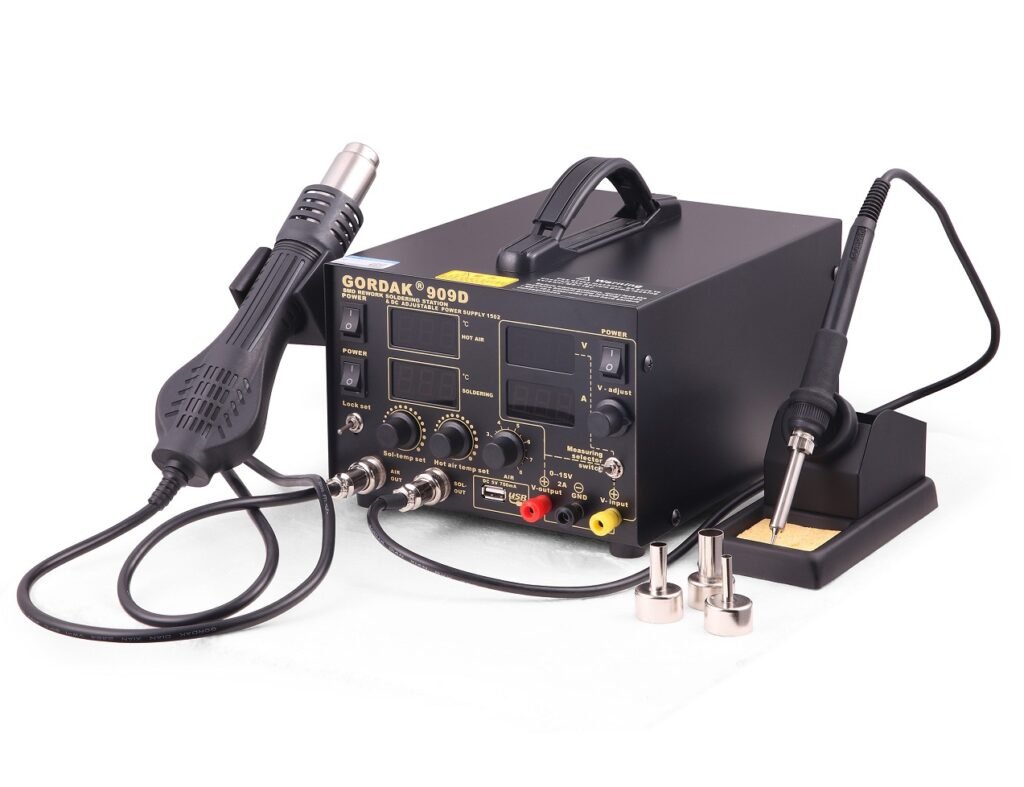
Soldering rework stations provide all the functions you need to remove former solder on the components and we provide quality soldering types of equipment made with standard materials.
In case you need a credible manufacturer and distributor of soldering and rework stations, kindly click here to see our various designs, and fully featured, affordable soldering equipment, we give you the quality and best offer.
Soldering Equipment Comparisons
Soldering Iron vs. Soldering Station: Which is the Right Tool for You?
Soldering Iron Vs Soldering Station
Soldering Iron vs Soldering Gun: Which is Better?
What Is The Difference Between a Soldering Iron And A Rework Station?